Posts Tagged ‘nutrition’

10-Day Yoga Challenge: Day Ten: “Party in the pose”

Tuesday, June 7th, 2011

It felt like a graduation. I completed my 10-Day Yoga Challenge Monday yesterday, taking my fourth class with the Anusara-inspired teacher who told me and the other students that we were all ready to kick it up a notch. We’d all gotten comfortable with her repeated calls to isometrically draw our legs together and to hug in, she said, stroking our egos. So now we could reach for “organic” energy to reach out and beyond, to “party in the pose.”

I was happy to end my 10-day intensive on this upbeat note, especially after Day Nine’s call to “play.” Although I was feeling behind the eight ball from having woken late and frazzled for hearing my daughter start crying the minute the babysitter walked in the door, I took the hint to really charge my practice. I imagined a carnival of colors in my limbs, all enjoying the way they complemented each other.

Not enough time had passed before this 10 a.m. class for me to feel sore from the previous day’s afternoon class, though, today, the day after, I feel my core awakened. I am reminded that one needs to keep working to keep getting stronger.

I will save more reflections on my experiment as a whole for a few more days, when the dust has settled and I get through some other deadlines. However, my immediate reaction is generally of happiness that I not only attended ten yoga classes in ten days but also that I wrote about them all each day. That feels great. Go Jess!

What does not feel great is the sense that, while both yoga and writing practices are incredibly healing for me, it’s nearly impossible to do them both and also live in the real world of my house with two children and a husband, a lot of irons in the fire in terms of work (volunteer and otherwise), and a special diet.

Obviously I don’t have to drive 20-40 minutes to a studio every day. I can take elements of this experiment to a more practical and less extreme approach, like a solo practice in the basement or classes at a closer studio or on the weekend. And my baby will not be exclusively breastfed and separation-anxious forever.

Still, I admit that I had a hard time holding onto the vibe of the “party” as the (hot!) afternoon wore on, and the baby wouldn’t sleep, and I had to go out to attend the last meeting of my son’s Waldorf preschool/kindergarten, which he still doesn’t know he won’t be attending next year.

The vibrant colors that were tired of partying in my muscles later swirled in the more confined space of my heart through the night, getting me out of bed at 4 a.m. to create some semblance of order by sorting napkins and paying my credit card bill.

I hope I can keep cultivating the voices of my teachers during my more challenging times, which I expect to abound during long summer days with a child out of school and another about to walk.

I hope to play, shine, radiate and all that good stuff, even when I fear too much indulgence in “partying” is going to come with a hangover of dirty dishes, unpaid bills, and piles of laundry.

How do you literally find the time to meet your own needs and keep things moving along at home without making uncomfortable compromises?

Other posts in this series:

Day One: The challenge begins!

Day Two: “Let your bottom blossom”

Day Three: “Shine!”

Day Four: “Surrender”

Day Five: “Root and reach”

Day Six: “Brighten the belly”

Day Seven: “Reveal”

Day Eight: “Expose your heart”

Day Nine: “Play”

Day Ten: “Party in the pose”

Share

Rally for Food and Farm Freedom brings a cow to the Capitol!

Monday, May 16th, 2011

What a great day to celebrate food choice — and to protest the government’s efforts to curtail those choices.

The sun shone brightly today at Upper Senate Park for the rally to protest the arrest of an Amish farmer selling raw milk. It was inspiring to see so many Real Food and raw milk supporters turn out, including so many with babies and children!

As Weston A. Price Foundation founder Sally Fallon Morell and rally organizer Liz Reitzig both said, many of us become passionate about real food when we become mothers. In my case, it was the desire to become a mom that led me to get off processed foods and soy and onto full-fat dairy and back to carnivorous ways after a near-vegan existence that left me depressed, infertile and suffering from a thyroid disorder and multiple skin problems.

I’m so grateful to the work of Fallon Morell, author of Nourishing Traditions, and to all the people like Reitzig of Grassfed on the Hill, people who spend so much time raising awareness and working as activists so that people can choose what to put in their bodies without their healing food being legislated away.

A full report on the rally will have to wait until tomorrow, but I couldn’t wait to share a few great photos, including of the cow whose milk was imbibed as fresh as can be by organizers and participants. For more details, see http://www.facebook.com/grassfedonthehill or www.grassfedonthehill.com

Me and the cow on the Hill

Organizer Liz Reitzig and Weston A. Price Foundation president Sally Fallon Morell

What a crowd!

Chef and holistic health counselor Monica Corrado

Liz Reitzig acted as emcee for the rally and the cow-milking, too!

Share

Talking Real Food with Robyn O’Brien

Friday, May 13th, 2011

Crunchy-Chewy Mama meets author and food activist Robyn O'Brien

When Robyn O’Brien’s youngest child had her first allergic reaction to eggs, I had already — over two years earlier — given up vegetarianism and soy in a quest to regain my fertility and, a few months later, given up gluten and dairy in a quest to heal my gut and my body overall from adrenal fatigue and autoimmune hyperthyroidism (Graves’ Disease).

That year, 2006, was about the same time that I figured out I also needed to avoid corn, but through my whole diet overhaul, I never did much research into mainstream approaches to allergies. I had some some “allergy elimination” through BioSET, which did seem to get rid of my seasonal allergies and specific symptoms to specific substances like sulfites.

Since I was already on the bandwagon to feed my child a clean GFCF diet even before I became a mother, I didn’t pay much attention to the “allergy” world. So when I picked up O’Brien’s book, Unhealthy Choice: How Our Food is Making Us Sick and What We Can Do About It, I was startled to find in one place so much of the information I’d been gathering piecemeal over several years. It was a gold mine! And to be told from the perspective of an unlikely activist, it’s a compelling read for even the most reluctant believer (I would imagine).

It was a thrill to be able to meet the author and AllergyKids founder in person and hear more about her story. Thanks to Stonyfield Farm for sponsoring a luncheon with O’Brien at Restaurant Nora.  I’ve also written a report for my Washington Times Communities column, but want to highlight a few things here.

One of the points O’Brien made over and over is that foods are often made for European buyers and buyers elsewhere in the world without the additives that companies stuff into American versions. We need to demand that companies take out dyes, high fructose corn syrup and the like, by voting with our dollars. If we buy foods that do not contain unhealthy ingredients, O’Brien said, the industry will provide more of those options and the accessibility of healthy options for everyone will increase.

Now, I’m not going to go out and shop at Wal-Mart or buy Coca Cola or Kraft products just because they have reformulated their products in the past few years. I still don’t see foods in a package as generally being Real Food or particularly “nutrient-dense,” which is the phrase O’Brien promoted in her talk. But, I do realize, as O’Brien and other food bloggers and bloggers who write about raising kids pointed out, that food safety is a socioeconomic issue and a political issue.

There are food deserts in a lot of places — including just miles away from our luncheon elsewhere in Washington, D.C. And the reality is that foods with HFCS are cheap because of corn subsidies, which is a real political issue. We are funding farmers to pump their foods full of a sweet substance that doesn’t offer any fiber or minerals and that is likely to be genetically modified, which might increase its likelihood to trigger food allergies.

So if people are going to buy food in a box, at least it can be without substances our bodies were never designed to handle. I’d still rather buy straight from the farmer — and I will if I can. But I am in a position of privilege, and until we can shift some major things around politically and in the way people plainly think about food, every little step toward simpler ingredient lists is a good one.

When asked about cost and “results” of eating a diet of mostly organic food, O’Brien mentioned several times that she saves an enormous amount of money and time by not driving to the pediatrician so often. Her family is healthier and requires spending less money on healthcare because they are eating for health instead of managing disease.

I feel like I make this point a lot. My son has had homeopathy and bodywork but never a mainstream medication. We heal through food and we prevent illness through food. Food is our medicine. So if it costs more but keeps us healthier and happier, that’s worth a whole lot.

I could write a tome on this, but readers would be better off just checking out O’Brien’s book!

After scoring the last available library copy in my area to read in preparation for the luncheon, I received a free copy yesterday in my luncheon goodie back. The copy I ordered just came today from Amazon.

I can already think of at least a dozen people I want to give it to!

Share

Farm Rally coming up: Leave our milk alone!

Thursday, May 12th, 2011

Grassfed cows

I’m so excited about Real Food right now! I’m about to head to an event at Restaurant Nora (“America’s first certified organic restaurant”) with Robyn O’Brien, author of Unhealthy Choice: How Our Food is Making Us Sick and What We Can Do About It.

And on Monday, I’m going to attend a rally to protest the FDA spending time and resources on criminalizing raw milk farmers.

Here is the press release for full info. If you care about protecting our right to eat the food we want direct from our farmers, I hope to see you at 10 a.m. in Upper Senate Park on Monday, May 16!

Media Advisory from Grassfed on the Hill
Contact: Liz Reitzig: liz.reitzig@verizon.net or 301-807-5063

During Budget Crises Feds Use Tax Dollars to Sting and Raid Amish Farm Over Milk
–Consumers Rally Against Misspending of Tax Dollars

Washington DC—May 11. Members of a DC area buying group, Grassfed On the Hill, joined by people across the country, are furious with the aggressive treatment of peaceful Amish dairyman Dan Allgyer and the use of taxpayer money to prosecute him, especially during a budget crisis. Allgyer, who supplies the group with fresh milk and other farm produced foods, has been served by the Food and Drug Administration (FDA) with notice of a permanent injunction against selling milk into interstate commerce, the result of a year and half long sting operation that included an agent planted in the buying club to collect evidence against Allgyer.

“It is absolutely inexcusable that FDA has spent time, energy and money conducting an undercover sting and armed raid against a farmer over distribution of milk.” says Liz Reitzig, one of the group’s organizers. “We contract with farmers we know and trust and engage privately with them. The FDA has no jurisdiction here, and it’s time we stand together and demand that they stop treating our honest farmers like hardened criminals.”

Grassfed on the Hill has organized a Capitol Hill rally in protest, where they plan to milk an actual cow and drink the fresh milk. The rally, planned for 10:00 am May 16th at Upper Senate Park in DC, is expected to draw hundreds of raw milk advocates.

For additional details: http://www.facebook.com/grassfedonthehill or www.grassfedonthehill.com

For additional details on fresh milk see www.realmilk.com

For a list of raids against small farms in recent years http://grassfedonthehill.com/government-overreach/

Share

Who wins the title: “Most Conflicted?”

Monday, May 9th, 2011

Before I had even cracked the spine of the book Good Enough is the New Perfect: Finding Happiness and Success in Modern Motherhood, it got soaked. For at least the fourteenth time, I’d failed to screw the top on my new glass water bottle on correctly, and it spilled all over the purse I took when I left the baby asleep with a sitter to buy organic Romaine lettuce and go to the Hair Cuttery.

“Good enough,” I thought, “does not cut it when containers of water are involved. Perfect is required. This book is wrong.”

But really, I knew that the problem was all about me: I hadn’t been paying attention when I was screwing the lid on while drinking and driving (water, that is). If I’d just focused on one thing at a time, there would be no soggy books.

That’s pretty much the message of the book:

Choose what is important to you. Pursue it. Let the other stuff slide. Happiness will ensue.

It makes a lot of sense, and I’ve been moving toward that kind of narrowing. Well, maybe it’s more like a re-seeing of things I complain about for how they actually do work toward my big goals rather than thwart other smaller goals.

I'm calling this (uncropped) self-portrait "good enough" because reminds me that I'd run a half-marathon that morning. And that I'm a mommy goddess.

The book also helped me see that I am not as conflicted and frustrated as I might be if I had expected to go back to work after having my first child. But I had gotten to the point teaching high school English where I knew I simply couldn’t do it and be healthy. My struggles with my thyroid and celiac disease had gotten me clear on the fact that I needed to follow a different path.

So even though I had been like a lot of the over-achieving, perfectionist moms in the book, I knew I would just have to let some things go if I was going to be healthy and get pregnant. Once I got pregnant, I was even more ready to be done working and just be home with my son.

The whole time, however, I’ve wanted to pursue my own interests and eventually a little work. I started a writing group when he was four months old, started tutoring when he was a year old, and started a chapter of Holistic Moms when he was two and a half. It seems sometimes like my interests have multiplied, and there are times when I wonder if I will ever balance being the kind of mom I want to be with being an individual who feels all her needs are met.

Reading about so many moms who continued to want to “have it all” after giving birth, though, I realized that most of my conflicts are not really conflicts. I am privileged and lucky to be able to stay home (even if earning money does feel really good), and most of my interests dovetail more than I give them credit for. This book showed me that there are a lot of internal battles I could be having but am not. I think I may indeed be close to embracing the “new perfect.”

The commitment to health and well-being that I made in 2004 remains. It’s okay that this is my top priority and that things like fashion (for me or my kids) fall to the wayside. If looking good starts to become part of my broader goal (which it might, since “beauty” is my 2011 catchphrase), then swell. It should feel fairly effortless and, in fact, fun if it really aligns with my values.

But for now, I’m just going to try to honor that food and health — for me, for my family, and for my community — are the things I care most about. So the choices I make will reflect those values, and I don’t have to feel bad about not pursuing things that don’t.

In this light, “good enough” does sound rather freeing!

Disclosure: As a member of From Left to Write book club, I received a copy of this book for review. All opinions are my own. You can read other members’ posts inspired by Good Enough Is The New Perfect on book club day, May 10 at From Left to Write book club.

Additional note: It seems appropriate to give a shout out to two other moms who live and breathe “making it work”:

Washington Post staff writer Brigid Schulte has written about motherhood and time management for the Post Magazine and is working on a book about it. Two days ago, on Mother’s Day, she published an article about flexible work arrangements and included a profile of Jennifer Folsom, who I know from The Enterprising Moms. Jenn was the winner last year of the Hot Mommas Project, of which I was a finalist.

Check out this great article, and let the Post know these are important issues to cover!

Share

Putting a public face on “holistic”

Tuesday, April 12th, 2011

Welcome to the April Carnival of Natural Parenting: Compassionate Advocacy

This post was written for inclusion in the monthly Carnival of Natural Parenting hosted by Code Name: Mama and Hobo Mama. This month our participants have shared how they advocate for healthy, gentle parenting choices compassionately. Please read to the end to find a list of links to the other carnival participants.

***


Before I was interviewed by CNN about High Fructose Corn Syrup last year, I fretted about how to present my case in a way that would inform without preaching. I didn’t want to turn off parents who would sooner dismiss me as one of those crazy health-freak moms than hear out my concerns. I once posted about a condiment-making class on a mainstream moms club email list and found out later that one of the moms had had a fit over the teacher’s language promoting the class: “If you love them, make the ketchup!” She felt criticized and judged.

So I wanted to take a stand that I was comfortable with as a “real food” advocate but not judge people who haven’t followed the same path and come to the same place.

Sure, I’d be lying if I said I didn’t want all parents to read labels and stop buying food with HFCS. I honestly believe we would all be healthier without this industrial food product in our bodies.

But as I’ve learned many times (often the hard way), few people are swayed by someone else’s hardline position or “my-way-or-the-highway” tack. So I tried then, as I usually do when talking with people or sending email responses to more mainstream lists, to simply come from a place of personal experience. I have a better shot at reaching open minds if I share my own gratitude for figuring out how gluten (and vegetarianism) were problematic for my body and how turning to a traditional diet helped me heal (and get pregnant) than if I simply complain or preach. Everyone is different, and a how-to discussion might not resonate. But tales of triumph often do.

I have shared a lot of my stories in person and online — here and on email discussion lists. In encountering moms of all stripes, I’ve heard more than once something to the effect of “you should be some kind of health counselor with all you know!” It was nice to hear thanks and often — sometimes months, sometimes years later — I’ve heard back from people how something I shared started them down a path that led to the resolution or improvement of a health issue. That feels great.

I do think genuine sharing from an honest place can open minds and help heal bodies. So can simply living by example. A whole lot of folks I met back in 2006 ended up as Ergo owners after seeing me carry my son everywhere in one. And our homemade foods get questions and remarks of, “Oh, I should try that!”

But the biggest investment I’ve made in compassionate advocacy is founding and leading a chapter of Holistic Moms Network. I started a chapter because I wanted new moms and parents early in their holistic journeys to have a place of support and education. Although we of course want folks to join the organization and have access to learning (and teaching!) a whole lot more through participation in our community, our chapter grew very large very quickly, so we are not hurting in the numbers department. Still, I feel like there is a lot of value in just having our meetings out there for people to see, just to put a bug in their ear and get them thinking, even if they don’t ever become a member. Part of the work of the chapter, I believe, is putting a public face on holistic living so people know it is even an option.

You never know when someone who once saw our flyer with a January “Special Diets” meeting and a February “Allergy Elimination” meeting might, months down the line, find herself the parent of a dairy-sensitive child. She just might take a wider research approach to include holistic practitioners because she just saw the meeting topic titles.

Or maybe just the words “Mindful Parenting” or “Creating Balance in Family Life” might give a stressed-out parent pause when he or she sees it on the ice cream parlor bulletin board during the middle of a meltdown. Our meetings present possibilities for health and well-being.

This blog is titled as it is — Crunchy-Chewy Mama — because I am no exception to the rule that no one is just one thing. I am more crunchy than not, but I certainly have some habits and preferences that might seem like contradictions to holistic living.

But what I do want to be consistent about it believing in the possibility of health.

And when I put myself out in the world, that’s what I want to look like.

***

Carnival of Natural Parenting -- Hobo Mama and Code Name: MamaVisit Code Name: Mama and Hobo Mama to find out how you can participate in the next Carnival of Natural Parenting!

Please take time to read the submissions by the other carnival participants:

  • Natural Parenting Advocacy by Example — Jenn at Monkey Butt Junction uses her blog, Twitter and Facebook as her natural parenting soapbox.
  • You Catch More Flies With Honey — When it comes to natural parenting advice, Kate of The Guavalicious Life believes you catch more flies with honey.
  • From the Heart — Patti at Jazzy Mama searches her heart for an appropriate response when she learns that someone she respects wants his baby to cry-it-out.
  • I Offer the Truth — Amy at Innate Wholeness shares the hard truths to inspire parents in making changes and fully appreciating the parenting experience.
  • Advocating or Just Opinionated?Momma Jorje discusses how to draw the line between advocating compassionately and being just plain opinionated. It can be quite a fine line.
  • Compassionate Advocacy — Mamapoekie of Authentic Parenting writes about how to discuss topics you are passionate about with people who don’t share your views.
  • Heiny Helpers: Sharing Cloth Love — Heiny Helpers is guest posting on Natural Parents Network to share how they are providing cloth diapers and cloth diapering support to low income families.
  • Struggling with Advocacy — April of McApril still struggles to determine how strongly she should advocate for her causes, but still loves to show her love for her parenting choices to those who would like to listen.
  • Compassionate Advocacy Through Blogging (AKA –Why I Blog) — Jennifer at Hybrid Rasta Mama shares how both blogging and day-to-day life give her opportunities to compassionately advocate for natural parenting practices.
  • A Letter to *Those* Parents — Zoie at TouchstoneZ shares how to write an informed yet respectful reply to those parents — you know, the ones who don’t parent the way you do.
  • Why I Am Not A Homebirth Advocate — Olivia at Write About Birth is coming out: she is a homebirth mom, but not a homebirth advocate. One size does not fit all – but choice is something we can all advocate for!
  • Why I Open My Big Mouth — Wolfmother from Fabulous Mama Chronicles reflects on why she is passionate about sharing parenting resources.
  • Watching and Wearing — Laura at Our Messy Messy Life advocates the joys of babywearing simply by living life in a small college town.
  • Compassionate Advocacy . . . That’s The Way I Do It — Amyables at Toddler in Tow describes how she’s learned to forsake judgment and channel her social energy to spread the “good news” of natural parenting through interaction and shared experiences.
  • Compelling without repelling — Lauren at Hobo Mama cringes when she thinks of the obnoxious way she used to berate people into seeing her point of view.
  • I Am the Change — Amanda at Let’s Take the Metro describes a recent awakening where she realized exactly how to advocate for natural parenting.
  • Public Displays of CompassionThe Accidental Natural Mama recounts an emotional trip to the grocery store and the importance of staying calm and compassionate in the storm of toddler emotions.
  • I will not hide behind my persona — Suzi Leigh at Attached at the Boob discusses the benefits of being honest and compassionate on the internet.
  • Choosing My Words — Jenny at Chronicles of a Nursing Mom shares why she started her blog and why she continues to blog despite an increasingly hectic schedule.
  • Honour the Child :: Compassionate Advocacy in the Classroom — Lori at Beneath the Rowan Tree shares her experience of being a gentle and compassionate parent — with other people’s children — as a classroom volunteer in her daughter’s senior kindergarten room.
  • Inspired by the Great Divide (and Hoping to Inspire) — Rosemary at Rosmarinus Officinalis shares her thoughts on navigating the “great divide” through gently teaching and being teachable.
  • Introverted Advocacy — CatholicMommy at Working to be Worthy shares how she advocates for gentle parenting, even though she is about as introverted as one can be.
  • The Three R’s of Effective and Gentle Advocacy — Ana at Pandamoly explains how “The Three R’s” can yield consistent results and endless inspiration to those in need of some change.
  • Passionate and Compassionate: How do We do It? — Kelly at Becoming Crunchy shares the importance of understanding your motivation for advocacy.
  • Sharing the love — Isil at Smiling Like Sunshine talks about how she shares the love and spreads the word.
  • What Frank Said — Nada at miniMOMist has a good friend named Frank. She uses his famous saying to demonstrate how much natural parenting has benefited her and her family.
  • Baby Sling Carriers Make Great Compassionate Advocacy Tools — Chante at My Natural Motherhood Journey shared her babywearing knowledge — and her sling — with a new mom.
  • Everyday Superheroes — Who needs Superman when we have a community of compassionate advocates?! Dionna at Code Name: Mama believes that our community of gentle bloggers are the true superheroes.
  • Words of advice: compassionately advocating for my parenting choices — MrsH at Fleeting Moments waits to give advice until she’s been asked, resulting in fewer advocacy moments but very high responsiveness from parents all over the spectrum of parenting approaches.
  • Peaceful Parenting — Peaceful parenting shows at Living Peacefully with Children with an atypical comment from a stranger.
  • Speaking for birth — Lucy at Dreaming Aloud soul-searches about how she can advocate for natural birth without causing offense.
  • Gentle is as Gentle Does — Laura at A Pug in the Kitchen shares how she is gently advocating her parenting style.
  • Walking on Air — Rachael at The Variegated Life wants you to know that she has no idea what she’s doing — and it’s a gift.
  • Parenting with my head, my heart, and my gut — Charise at I Thought I Knew Mama shares her thoughts on being a compassionate advocate of natural parenting as a blogger.
  • At Peace With the World — Megan at Ichigo Means Strawberry talks about being an advocate for peaceful parenting at 10,000 feet.
  • Putting a public face on “holistic” — Being public about her convictions is a must for Jessica at Crunchy-Chewy Mama, but it takes some delicacy.
  • Just Be; Just Do. — Amy at Anktangle believes strongly about her parenting methods, and also that the way to get people to take notice is to simply live her life and parent the best she knows how.
  • One Parent at a Time… — Kat at Loving {Almost} Every Moment believes that advocating for Natural Parenting is best accomplished by walking the walk.
  • Self-compassion — We’re great at caring for and supporting others —from our kiddos to other mamas — but Lisa at Gems of Delight shares a post about treating ourselves with that same sense of compassion.
  • Using Montessori Principles to Advocate Natural Parenting — Deb Chitwood at Living Montessori Now tells how she uses Montessori principles to be a compassionate advocate for natural parenting.
  • Advocacy? Me? — Seonaid at The Practical Dilettante discovers that by “just doing her thing,” she may be advocating for natural parenting.
  • Feeding by Example — Mama Mo at Attached at the Nip shares her experience of being the first one of her generation to parent.
  • Compassionate Consumerism — Erica at ChildOrganics encourages her children to be compassionate consumers and discusses the benefits of buying local and fair trade products.
  • The Importance of Advocating Compassionately — Kristen at Adventures in Mommyhood acts as a compassionate advocate by sharing information with many in the hopes of reaching a few.
  • Some Thoughts on Gentle Discipline — Darcel at The Mahogany Way shares her thoughts and some tips on Gentle Discipline.
  • Compassionate Advocacy: Sharing Resources, Spreading the Love — Terri at Child of the Nature Isle shares how her passion for making natural choices in pregnancy, birth, and parenting have supported others in Dominica and beyond.
  • A journey to compassion and connection — Jessica at Instead of Institutions shares her journey from know-it-all to authentic advocacy.
  • Advocacy Through Openness, Respect, and Understanding — Melissa at The New Mommy Files describes her view on belief, and how it has shaped the way she advocates for gentle parenting choices.
  • Why I’m not an advocate for Natural Parenting — Mrs Green at Little Green Blog delivers the shocking news that, after 10 years of being a mum, she is NOT an advocate for natural parenting!
  • Natural Love Creates Natural Happiness — A picture is worth a thousand words, but how about a smile, or a giggle, or a gaze? Jessica at Cloth Diapering Mama’s kids are extremely social and their natural happiness is very obvious.
  • Carnival of Natural Parenting: Compassionate Advocacy — Even in the progressive SF Bay Area, Lily at Witch Mom finds she must defend some of her parenting choices.
  • A Tale of Four Milky Mamas — In this post The ArtsyMama shares how she has found ways to repay her childhood friend for the gift of milk.
  • don’t tell me what to do — Pecky at benny and bex demonstrates compassionate advocacy through leading by example.

Share

Taking care of myself: GAPS diet update

Saturday, April 2nd, 2011

Spring hasn’t fully registered here in chilly but blossom-filled Northern Virginia, but I think my stomach is finally on the mend.

I started the GAPS diet on February 6, and I am still in a modified introductory stage. I’m only just now even considering trying to eat any raw foods (besides juice, and avocado). It has taken 6 or 7 weeks for my gut to tell me that it’s starting to heal. Bone broth (so far only chicken stock) is and will continue to be a mainstay, and I can eat eggs, meat, nuts and nut butter and most non-starchy vegetables roasted and/or cooked for a long time in broth. Butternut squash never tasted so sweet!

I still have a long way to go, and I don’t anticipate eating grain or anything starchy for months to come. But it sure is nice to not be in pain!

It’s so clear that this diet is what my body needs, and I am 100% committed. But it sure takes a lot of time!

So the blog has been quiet; I didn’t get to Farm Food Voices, and I haven’t been much on Facebook. My friends’ emails often get ignored or replied to well beyond their time.  Even going to the pediatrician is a major ordeal: it’s impossible to be away from the house for more than a few hours. First there are the specifics of what I need to eat, but then there’s also the fact that eating on the go or while stressed seems just about as bad for me as eating problematic food. I can’t always be sure that eating at home will be stress-free; you never know when the baby is going to wake or change her mood! But at least here I can more closely approach mindful, intentional eating.

I’ve had questions of “what are you eating then?” and probably a lot of people wondering why I’m just MIA. This is what my days are looking like of late:

  • Wake between 5:00 and 6:50 a.m. depending on the baby’s antics during the night and morning. I can usually get up and start things moving while she remains in bed, but sometimes she accompanies me downstairs in the Pack N Play or is worn on my back in a carrier.
  • Put tea kettle on for warm water. Drink with added mineral drops.
  • Make breakfast for husband and son (egg, a healthy nitrite-free breakfast meat, some veggies — usually zucchini and spinach, or maybe green pepper and tomato).
  • Make an egg for myself and set aside with sauerkraut, avocado and olive oil
  • Take Bio-Kult probiotic
  • Bring in-process chicken stock (bone broth)from the day before back up to a  boil and then turn down to low. I have a batch going about 65% of the time and have started using the bones for a second round (and ordering necks and backs from my farmer. But I still haven’t gotten to the beef bones!
  • Warm up already-made stock and add onion, celery, spinach, carrot and whatever other veggie I want to let get good and cooked. Add garlic toward the end
  • Take my son to school
  • Hope baby transfers asleep when we get home. Or try to get her to sleep if she’s awake. Or give up and have her sit with me while I eat breakfast of broth, egg as noted above, some leftover home-cooked meat and perhaps some leftover “bread” made out of egg, coconut oil and almond flour or pancake of almond butter, egg and zucchini. Take digestive enzyme and Green Pastures cod liver oil
  • At some point have lunch. Hopefully I left myself some broth from this morning to heat up so I don’t have to chop more vegetables. And maybe I have more leftover meat (chicken, salmon, beef, pork, turkey) rather than another egg.
  • At some point maybe have a snack of apple (if I’ve been cooking out the sugar on the stove in water) and ghee, or crispy nuts, or some almond flour “bread” or pancakes with some almond butter or sunflower butter (the only packaged foods I’m eating. Sometimes a nursing mom just needs a spoonful of fat!)

    GAPS diet pancakes of just almond butter and eggs with banana. Right now I'm doing onion and zucchini instead of banana (which was Monica Corrado's adaptation).

  • Take care of the baby when she’s awake or try to nurse her back to sleep again. Maybe take a walk. Maybe get some housework done.
  • Pick up my son at 3:00 (three days a week. The days I pick him up at noon have a whole other layer to them!)
  • If we have nothing going on that afternoon, work on dinner in between giving him attention and trying to keep the baby happy. Wear her on my back in a carrier through much of dinner prep.
  • If we have a playdate or a class after school, I’d better hope I spent some of the morning chopping vegetables to make a stew in the crock pot or that there is something else ready as a leftover to have for dinner!
  • Hope my husband gets home in time for us to all eat at least part of our dinner together by 6:00. But sometimes I need to feed my son closer to 5:00 and let him eat a second time when his dad gets home.
  • Hope the baby will make it until 6:30 so she can see her dad before I put her to bed. On a good day, she’s napped enough that she can happily sit at the table with us. So far she’s tried a little broth and some very mushed veggies (tiny pieces). She seems to really love the lemon-flavored cod liver oil!
  • Emerge from darkness around 7:00 or 7:30 to clean kitchen, prepare my son’s lunch for school, and then prepare whatever is necessary for tomorrow’s food — maybe strain and jar the stock if it’s done, or make a “loaf” of almond flour bread or a batch of pancakes, or simmer some apple, or soak the nuts, or get the nuts out of the dehydrator.
  • Check email, do laundry (diapers every other day, regular clothes most other days).
  • Collapse.
  • Or, go back up to nurse the baby and then decide that since I probably two or three quiet hours ahead of me, work on the computer or on the house until way too late. Then feel hungover the next day, especially if she’s up every 90 minutes from midnight until 6 a.m. when she decides to sleep soundly after I’ve gotten out of bed.

So there you go. And it took me two days to get this post up. There are a ton of other things I want to write, but right now — especially the week after my son’s fifth birthday brought with it cleaning, rearranging, buying, baking, and more cleaning — I just am going to need to be rather than reflect in pixels, as much as it hurts to keep my fingers off the keyboard.

Share

Advocate for local food at Farm Food Voices 2011!
Wednesday, March 16th, 2011

On Wednesday, March 16, local food advocates will convene on Capitol Hill for a grassroots lobby day. If you care about where your food comes from, join them!

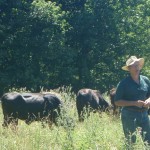
Joel Salatin with Polyface Farms' grassfed cows

Farm Food Voices says: “Join a coalition of organizations, local food advocates, and small family farmers from across the country to lobby federal legislators on local food and food sovereignty. Help reveal to Congress the disastrous ramifications of the recent “food safety” legislation and provide them the real food safety solution: unregulated local trade direct from producer to consumer. True food sovereignty means food security and national prosperity. In every country.”

This event, organized by the National Independent Consumers and Farmers Association (NICFA), is in its fifth year. From 12 noon to 2:00 p.m. will be an impressive “Feast,” a local foods reception in the Kennedy Caucus Room of the Russell Senate Office Building. In addition to the fact that “chefs and caterers from some of the finest restaurants in our region will serve dishes showcasing locally produced food,” there will be some amazing speakers. Farmer/author/activist Joel Salatin of Polyface Farm will emcee the reception. Other speakers include:

Jonathan Emord, Esq. – Attorney and author of The Rise of Tyranny and The Global Censorship of Health Information, he has defeated the FDA seven times in federal court.
Bryan Voltaggio - Chef/owner of acclaimed VOLT restaurant and season six runner-up of the TV series Top Chef
Kristin Canty – Producer and director of Farmageddon, the movie that depicts the dwindling food sovereignty in America and the extreme measures the state uses to attack farmers growing healthy food
Mark Lilly - Founder and owner of  Farm to Family “farmbus”, bringing fresh farm food to central Virginia communities and transforming the American food landscape “one stop at a time.”

Attendees are encouraged to make appointments with their legislators from 9:00 to 4:00 that day and to urge their Senators and Representatives to attend the 12-2 reception.

See also Kimberly Hartke’s blog, Hartke is Online!

Contact information for the event:

Contact: Liz Reitzig, NICFA Secretary
liz.reitzig@verizon.net
301.807.5063

Joel Salatin of Polyface Farms with chickens

Pigs foraging at Polyface Farms

My son with the turkeys at Polyface Farms (and a hat that was given to us; we've never eaten at Rainforest Cafe! I don't know anything about its food politics)

Share

Healing my gut and finding my bliss

Wednesday, March 9th, 2011

Read more about Real Food at Kelly the Kitchen Kop who hosts a great Real Food Wednesdays blog carnival each week!

I’m looking for my inner “healing junkie.” Have you found her? She seems to run and hide the second the baby wakes up, like right now.

(A day later…) But it’s not the baby’s fault. I lost my spiritual way a few years back, when I started doing too much to put out into the world instead of into my body and my home.

And I lost my nutrition way when my son started attended preschools and birthday parties, and I taught myself how to make “healthy” gluten-free options so he could have bread, cake, muffins.

The problem is, my gut was so harmed from years of a grain-based and low-fat diet — and then hit hard during my first pregnancy by the introduction of corn and lots of goat cheese — that I just can’t tolerate even gluten-free substitutes or much in the way of sweet. I really need to be grain-free, starch-free, sugar-free.

After having symptoms of IBS through most of my pregnancy and postpartum, I finally had three episodes in the space of one week and convinced me to do the GAPS diet – the Gut and Psychology Syndrome Diet, designed by Dr. Natasha Campbell McBride. It takes much from the Specific Carbohydrate Diet, and I consulted both back in 2006 but never did them full-out. Now I am.

It’s tough as a mom with an exclusively breastfed baby to get enough calories. The first week was very challenging as I subsisted mostly off of homemade chicken stock made into broth with veggies. And I ate egg yolks and nut butter. I had days of feeling shaky and like I could not possibly get enough calories.

It was sugar withdrawal, and once I was out the other side, I felt like I’d broken an addiction. What a relief to be free of the highs and lows of starch-laden diet.

Granted, I wasn’t eating nearly as many carbs as most people do, but I was doing a lot more than I had in the past, including lots of potatoes, sweet potatoes, and rice. And I was eating fruit whenever (even though most of it doesn’t combine well with meat), and too much of it.

Most importantly, I was acting like I was in fight or flight mode all the time instead of believing in the goodness of what I was taking into my body.

But three weeks ago, I put a stop to that. Nothing packaged passes my lips now, with the sole exception of some nut and seed butter because I just can’t make that much. I do have lots of properly soaked nuts to munch on if I need something I can take with me, but I’m trying to eat only sitting down, and only at home if at all possible.

I borrowed the DVD Crazy Sexy Cancer from a friend, who got it because our friend, Liz, is just starting treatment for breast cancer. The film reminded me of the importance of the spiritual component to healing. I, too, used to be a healing junkie, but it’s hard to be that focused on yourself when you are a mom.

Until crisis comes. And then I had to make a change. When I saw the film, I felt so good about having gotten on the GAPS bandwagon and decided to make my health a priority.

So here’s how my fridge and plate look:

  • all my meat is cooked fresh (mostly from our farmer) – nothing processed or packaged
  • I’ve got stock simmering on the stove most of the time and have broth with each meal (if not as the basis of the meal)
  • I’m not eating any fruit except apple cooked in water with the water thrown out to lessen the sugar
  • my day begins with fresh juice – celery, parsley, cucumber, dandelion green, carrot, and a little beet and apple
  • I wait until after preschool dropoff to have breakfast, which includes broth with veggies well cooked and either egg/nut butter/zucchini and onion pancakes (just those four ingredients) or just an egg

    These are a variation on the GAPS intro diet pancakes using banana instead of zucchini. Just banana, almond butter, and eggs!

  • other solid foods include almond meal/egg/coconut oil “bread” (just those three ingredients!) and avocado
  • sauerkraut accompanies all meals, as does some pickle juice and a digestive enzyme
  • my probiotic is now Bio-Kult

I’m also adding in some flower essences and essential oils, and I got acupuncture today (that means last Wednesday!) and will try to get some craniosacral therapy or an osteopathic treatment.

I also plan to try to implement the following evening ritual when there is nothing else going on:

  • Put baby to bed 7-7:30
  • Computer time until 8:15 or 8:30
  • Bounce on the trampoline and/or do yoga
  • Snack 9:00 (I just can’t make it nursing all night without one!)
  • Straightening up, prepping for the next day, and trying to do some meditation 9:50 to get to bed at 10

One week later…
Plenty of ups and downs.  I haven’t hit the above timeline at ALL (though I did go to bed at 6 p.m. on my birthday!) There is no time to write when you spend about 2-3 hrs/day on food prep and eating mindfully and also spend about 2-3 hrs a day nursing a baby and trying to get her to go to sleep!

GAPS is clearly the way I need to go, but it’s causing me to have to let some other things fall to the side. That is probably a good thing!

So before another week goes by, I’ll go ahead and document this phase of the journey and share just a few resources for the GAPS-inclined, especially in the DC area:
Simply Being Well and Monica Corrado’s new GAPS blog
Harris Whole Health

Share

Foundation airs its criticisms of USDA and presents alternative guidelines

Thursday, February 17th, 2011

Read more about Real Food at Kelly the Kitchen Kop’s Real Food Wednesdays Blog Carnival!

On Monday, February 14, the Weston A. Price Foundation made its criticisms of the U.S. Department of Agriculture’s dietary guidelines crystal clear. For anyone who had assumed the governmental agency must be doing its best to ensure the health of Americans, Monday’s press conference was a wake-up call.

Not only did the Foundation explain the problem with low-fat, high-carb diets and their particularly insidious effects on growing children, but it also laid bare the troubling conflict of interest in having an agency that promotes commodities tell us what we should eat (hint: it’s a lot of those processed grain commodities!)

The video of the press conference is a wonderful starting place for anyone interested in understanding how we got to a place where so many people feel unwell and are grappling with diabetes and obesity. We have been encouraged to follow an untested diet rather than eat traditional foods that would sustain us as they did our ancestors.

I hope that this critique and the new alternative guidelines the Foundation is presenting in its Healthy 4 Life materials will spur debate and will result in fewer children — and adults — being led on the path to ill health. As someone whose fertility, thyroid and overall health were severely compromised by an over-consumption of soy and grain, I’m thrilled to have this information getting out to the public.

My report on the press conference follows.

Foundation founder and President Sally Fallon Morell, author of Nourishing Traditions: The Cookbook that Challenges Politically Correct Nutrition and the Diet Dictocrats opened the press conference with an overview of scientific research that was ignored in the development of the USDA dietary guidelines, which were revised in 2010. She discussed the benefits of following traditional diets that contain plenty of saturated fats, which she explained are crucial for many functions in the body and for the development of healthy brains in children.

Fallon Morell noted that the USDA has spoken about “nutrient-dense” foods in school lunch only in terms of fruits and vegetables when those foods are, in fact, poor in key nutrients for optimal health. It is saturated fats, she explained, that support cell membranes and that put calcium in our bones. These fats are needed for optimal lung health, and the kidneys and immune system depend on them as well.

Since schools must comply with USDA guidelines in order to receive federal funding for school lunch, children’s meals have an upper limit for cholesterol and fat but not for carbohydrates or sugar. With whole milk no longer widely offered, children have the choice of plain low-fat milk or flavored low-fat milk, which has as much sugar as soda, hence the nickname “soda in drag.” It is full-fat dairy and other cholesterol-rich foods that contain vitamins A, D, E, and K, choline, and other minerals vital for brain and neurological system development.

Cholesterol is the “mother of all hormones,” Fallon Morell explained; it is responsible for the production of sex hormones and hormones that aid in healing and stress. “When we restrict cholesterol-rich foods, we are taking away the very foods children need for optimal brain development,” she added, citing low-fat diets as one of the reasons children struggle academically.

When people are denied foods in their full-fat state, they simply eat more of lesser foods in order to obtain the same number of calories or sodium. Fallon Morell described the school lunch children are served as “Puritanical” and said it leads to children to seek out what she calls “pornographic foods” in the afternoon to compensate for the missing calories.

In references to scientific literature, personal experience, and professional anecdotal evidence, additional speakers demonstrated how the USDA dietary guidelines negatively impact the health of the United States. Speakers also criticized the politicized nature of these guidelines that come from an agency with a vested interest in promoting certain foods so that they will be bought.

Morton Satin of The Salt Institute reiterated Fallon Morell’s point about junk food, explaining that when presented with low-sodium alternatives, people simply eat more to sate their need for salt. He also discussed the manipulation of data to claim that low-sodium diets are healthy when in fact they increase the risk of obesity.  Satin cited a Harvard University study that found that healthy people placed on a low-sodium diet developed insulin resistance within seven days; the latest iteration of the USDA dietary guidelines might thus promote an epidemic of diabetes, Satin said.

Satin was just one of the day’s speakers who noted that while the Mediterranean diet has been held up as a healthy model, it contains far more sodium and fat than USDA guidelines allow. Satin expressed concern that studies showing various negative effects of low-salt diets – including lower birth weight, lower cognitive function, and higher rates of falls and fractures – have all been ignored in the development of the USDA guidelines, which he called a product of ideology, not a product of science.

Continuing the critique of the agency’s motivations, Adele Hite of the Healthy Nation Coalition opened her remarks demanding that we ask why studies like these are being ignored. A PhD candidate in nutrition epidemiology at the University of North Carolina, Hite became obese and sick when she attempted to follow USDA guidelines and got well by shifting her diet to include saturated fats and other traditional foods. She has worked with diabetics who have reversed their disease with this approach.

Hite said that the USDA “disregards scientific evidence” in order to increase the demand for U.S. agriculture products by telling the public to eat a grain-heavy diet despite the fact that carbohydrates are biologically unnecessary and highly addictive. The recommended diet is resulting in higher health care costs and diminished quality of life.

Hite noted that the first set of dietary guidelines produced in 1980 was created by politicians, not scientists, and she made the case for an independent agency to take over development of dietary guidelines. “The only way to grow our agriculture is to increase processing,” she said, explaining that USDA is motivated to promote foods that it wants to sell and is not motivated to protect the health of the nation. “No government agency should be given so much power without checks and balances,” Hite argued.

Other speakers agreed with the criticism of the guidelines and the means by which they were created. Peter Farnham of The Nutrition and Metabolism Society said that diets with 40% of calories coming from carbohydrates are to blame for an increase in obesity. The only people for whom that kind of diet is appropriate are athletes.

Farnham also noted that studies claiming deleterious effects of a high-fat diet have only been measured in a high-carbohydrate diet, not in a diet low in carbs. He called for an independent body to develop guidelines and to include the research that shows the problems with carbohydrates.

Registered Dietician Pam Schoenfeld of Reinvent Your Diet described her realization that animal products are vital for health, contrary to what she was taught. “Well-meaning dieticians take information they’re told is evidence-based and telling unsuspecting people to follow” these guidelines. She reiterated others’ position that the USDA guidelines will lead people to be “less well nourished over time and more prone to obesity.”

Fallon Morell added that the USDA has not been open to her organization’s concerns. There wasn’t a single member of the committee actually present at the oral testimony sessions that were required to be held before the adoption of the newest guidelines, so public input was in name only.

The Weston A. Price Foundation was named for the dentist who researched the health of cultures around the world in the 1920s and went on to sing the praises of traditional diets. Modern diets put an emphasis on shelf life and convenience, Fallon Morell explained. Processing minimizes nutrients in the diet, and in order to solve our current health crisis, the Foundation contends, we must go back to traditional foods.

One of the goals of the Foundation is to make sure people know that they do not need to be afraid of high-fat foods as the USDA guidelines would imply. Fallon Morell said she did not expect to change the system or the USDA guidelines, but she does hope that the Foundation’s work will at least convince parents to make their children’s lunches.

The Foundation’s new Healthy 4 Life guidelines call for four main groups: animal foods, grains, fruits and vegetables, and healthy fats. The complete booklet, including recipes, is available in full as a PDF and can be ordered off the Foundation’s website for $10.

Share