Posts Tagged ‘food’

The transition begins: Waldorf to public school

Sunday, June 12th, 2011

Just how many different people can I be in my head in one day? Well, at least two solid positions are staking claim to my mental landscape. One is incredibly sad that yesterday was my son’s last day at his Waldorf school, and the other is very excited for our family to become part of the local public school community.

So why the ambivalence?

E’s Waldorf school — where he spent a year in parent-child, a year in the three-day “kindergarten,” and this year, what is designed to be the first of two years in five-day “Oak Tree Kindergarten” — is a beautiful place. I love that he has been able to unfold, as they say, free of expectations to “achieve” or perform in any particular way.

The boat my son loved making at his Waldorf school, and his book of colorings. His symbol this year was a seashell.

Yesterday, after we admired the boat he made (and loved making!), we looked through his book of coloring from the whole year. I was in tears seeing how he’s gone from abstract scribbles to intricate drawings with clear storylines all on his own, with no direction or suggestions. At this school, he truly is learning for the love of the experience, not on anyone else’s timeline or following anyone else’s agenda. What a gift.

Waldorf education has a reverence for nature and a foundation of being in tune with the seasons. He starts the morning outside, playing for almost an hour no matter what the weather. If he’s staying until 3:00 (as opposed to noon, when the regular 5-day program ends), he plays outside again before lunch and for another 20 minutes or so before pick-up time. The playground is small, but it’s lovingly tended, and the children make use of logs and wood chips and the sandbox — and their imaginations — rather than relying on a lot of equipment, other than a small slide and a climbing wall.

Beyond questions of space and “curriculum,” it is just so clear that he is loved at this school. His teachers are so kind and thoughtful about their interactions, and he knows his place in the community. The class has 16 children, each of whom has a symbol and an “acorn child” likeness doll. He was so excited to report to me over the course of the fall whose child appeared and when, and wearing what clothing.

On the last day of school, his teacher gave each child a small book with their symbol on the front and a simple series of four pictures inside. It is such a quiet expression of love, of celebrating the simple wonder of something like flying a kite and the child’s discovery of the joy therein.

His teacher also gave the children “gems” on the last day and gave a special one to my son to remind him to take a nice rest every day. The teacher knows E stopped napping at age 2.5 (he is now 5.25) and that I fear the summer with a boy who won’t nap and a baby who has become increasingly resistant to going down for a nap unless she’s driven. (Let’s hope it a phase.) I’m grateful to the teacher for this gift and for all he and his assistants have given us this year.

I am in tears. How can I take my son away from this beautiful environment to a bigger class where academic expectations might trump magic and beauty? My heart breaks every time he talks about how he’s going to be a Tall Oak next year (when he turns six), and how he’ll get to make a sword. This year, he loved sanding his little boat and was apparently quite taken with the process, I’m told by teacher and son alike. He was the first one to finish his boat, something he seems to take great pride in. I feel awful for keeping him from more memories like this in the beautiful spaces that are his classroom and school.

But, he is not my only child, and mother is not my only role. Sometimes I wish I could approach it that way, but I know it’s no use trying to push a square peg into a round hole. I need to pursue writing and to put a significant amount of time into my health and wellbeing in order to be the best possible — and most sane — mom I can. This means I need some amount of childcare, and I need to prioritize expenses.

His school is a large expense. We’ve had him in three days of the school’s 12-3 p.m. Afternoon Program for the past two years, and while the hourly breakdown is comparable to babysitting, it adds up to a whole lot of extra money for time with just one child. I now have two. I think the program has served him well with its calm routine, and I don’t relish long summer days that depend on my willpower and energy in the face of not having any control over whether the baby will cooperate with a nap or scream unless I put her on my back.

However, we would not be able to rationalize the expense of the Afternoon Program next year and also pay for the regular tuition and for some childcare for the baby so that I can do a little work, exercise, and get to appointments. Without the Afternoon Program, my son would be home every day at noon, which means my daughter and I would have less than three hours each morning together and that her nap would probably have to once again revolve around her brother’s schedule. That, or (and/or?) her brother’s afternoon schedule might need to revolve around his sister’s need to nap. And in the middle, I will have next to zero time to do much for me, let alone house chores or preparing food for my high-maintenance diet. I expect we’d devolve into my staying up late and stressing my adrenals ever further.

I realize that there are things I can and perhaps ought to let go. However, one area I will not compromise on is food: there is no microwave in my kitchen, and very little that we eat that comes out of a container. We do not eat fast food, and we rarely go out to eat. (With the exception of a luncheon at the organic oasis of Restaurant Nora and a trip just tonight to Food Matters since it will be closing soon, I haven’t eaten at a restaurant since I started the GAPS diet at the beginning of February, over four months ago.)

My son always has — and will have — a healthy lunch, and until recently I made all the gluten-free substitutes I had to send for his school snack: bread on Tuesday and Wednesday and a muffin on Thursday. So even though his school serves only organic food, it doesn’t work well for us as celiacs.

At his new school, the day will start at 8:00 instead of 8:30, which might be a little hard at the outset, but the earlier start means his father will be able to take him to the bus, or, more likely, right to school (just two quick miles away through neighborhoods) before heading to work. This means I can continue to prepare a healthy breakfast and start to provide a calm morning environment since I will not need to get myself and the baby out of the door at the same time.

I’m not sure yet if I’ll pick E up from school at 2:41, carpool with a neighbor, or let him take the bus home, but he will be done at the same time every day, and it’s my hope that I can use some of the early afternoon time to prepare at least part of dinner so that I can be more present with him when he returns.

I hope this new schedule benefits my son, who will get time with a less harried mom and time with his dad in the morning. I hope it benefits my daughter, who will get to have a nap on her terms and (if she ever starts eating food) breakfast at home without being rushed. I hope it benefits my husband, who will get more QT with his son in the mornings and get out the door at a consistent time. And I hope it benefits me by letting me eat without stress and thus more fully digest my food and heal my gut, which I know is key to all my other health issues, physical and mental.

But it’s not just about schedules and distance from home, as compelling as those are. No, I would not entertain any of these logistical perks if there weren’t other reasons to feel good about this elementary school. But there are. A lot of them.

The school uses a portfolio-based assessment instead of grades. The curriculum is hands-on, an Expeditionary Learning approach that is patterned after Outward Bound. Students participate in multidisciplinary units that are several weeks long. The K-1 (multiage) classes have tables and centers but not desks. The school principal never once mentioned standardized tests on the tour I took, and during the open house my husband attended, she said something to the effect of test scores not being a reason to come to this school.

She refers often to the school as a “community,” and it’s clear from the beautiful grounds and the lively gardens that it’s not just talk.  Last year the school donated 100 pounds of lettuce to Arlington Food Assistance Center, and I’m told the children also enjoyed their harvest in salads at lunch, which is served in classrooms rather than a cafeteria. I know several people who send their children here and love it.

Everything the principal has said on tours and in conversation with me conveys an openness to seeing each child as an individual. The school utilizes the Responsive Classroom model that includes a community meeting at the beginning of every day. So much talk is not very Waldorf, but I do think it will serve my chatty son well.

The playground is large and open. There is a tricycle path, logs for climbing on, and, when I dropped off my son’s paperwork in April, I noticed a group of girls digging in the dirt with pails and shovels. The school sits next to a nature center with which there are ongoing talks about more collaboration and married landscape construction. (I understand these things don’t move like lightning, but at least the desire is there!)

All K-1 classrooms have doors to the outside, and children go out twice a day (or at least get to go to the gym in bad weather). I’m expecting that my husband will walk E to the school from down the street so that he will have exposure to the elements every day. Oh, and I think I will take E on Fridays so that I can attend the whole school community meeting. Maybe then I will take the baby to the nature center or for a walk on the nearby bike trail after that.

Assuming we are happy enough to keep him there, E will have the same teacher for grades two and three and then will loop again with the same teacher for fourth and fifth grade. The continuity is something I value. Teachers in Waldorf schools stay with the same group of children for years.

I also like that E will be getting music and Spanish in school, and the art in the hallways is beautiful. You can tell the children all had the same assignment, but they were given the freedom to find their own way into it. I didn’t see photocopies of the same sheet just colored differently.

But beyond all these assumed-to-be-great things about this particular school, I am also compelled to join the ranks of public schools because I think it’s important from a social justice perspective. I want to be an advocate for all children, to give them the opportunity to have healthy choices. Last night I attended the documentary What’s on Your Plate at Barcroft Elementary School as the culmination of the PTA-organized spring Farm to Table Week. It’s exciting to see people bringing awareness of healthy eating and sustainable farming to public schools, but it’s not going to happen without involved parents. I feel I ought to be one of them.

I also don’t want E insulated from the community in which he lives. He is certainly exposed to many cultures and languages at the Waldorf school, but it’s not the same as the rest of the county. Having taught high school nearby and having worked on issues of diversity in honors vs. regular classes, I feel it’s important for my son to get to know a wide variety of people and to learn from an early age that people don’t all think and talk the same.

Of course, I was comforted by a lot of sameness at the Waldorf school. If you’re a parent who eschews most TV and electronic media, it’s great to know that other parents around you do, too. Being on the same page with people is great, and I honestly do think the world looks prettier without big plastic toys or cartoon characters on backpacks. My son is a sponge, and he does notice everything, and sometimes even the smallest exposure translates into wanting things I don’t want him to have or even know about.

But I can’t keep him in a bubble forever on that front, and I can make choices I feel good about at home. I just need to stick to them! And my hope is that our new schedule will make it more possible for me to interact with other Waldorf-inspired friends and homeschooling moms so that I can make my home environment more in line with my values. This is quite a learning curve!

On that topic, I should at least mention that it is not for lack of interest that I’m not homeschooling. Sometimes I think that would be ideal. I just don’t think it’s right for my family at this time, mostly because of my temperament and some because of my son’s super-social nature and his intense early attachment to me that seemed to call for interaction with other adults. I do feel that he benefits tremendously from interacting with other caring adults and with other children in an organized setting on a daily basis.

I still don’t think it would be the right dynamic for him and for me, and it would be hard for me to manage with the baby since I still don’t feel like I know a fraction of what I’d like to know about creating a home. However, if he struggles mightily with this transition or if I feel that public school is wringing out his sense of fantasy and magic, I will consider it until there’s a spot open at the Waldorf school or until we decide it’s time to try public again.

Although I do worry about him having sensory overload in the chaotic and cluttered public K-1 classrooms, E has been in plenty of mainstream settings with camps and other programs, and he always does fine. He usually asks to go back!

On Thursday, I kept him home from his penultimate day of school because he fell out of bed the previous night and split open his lip, which was still incredibly puffy in the  morning. I expected that I would skip visiting Barcroft that day even though I wanted to take photos to write an article about Farm to Table. Around 11:30, the baby had woken up and nursed, and I decided we’d just go ahead and go anyway.

On the way in, we saw our friend who works there part-time, which was a treat. In the cafeteria, E was happy to try snap peas with peanut sauce and yellow squash with a yogurt dip while I chatted up the guest chef and snapped photos (with the baby on my back). He stopped to admire student art in a case on the way out, and when we got home, he offered of his own volition that he had a really nice time and was glad we went.

I felt relieved that he was not freaked out by the setting — the bigger kids, the bright lights, the loud cafeteria — and that he actually felt quite comfortable. Later we picked peas from the garden made an accompanying peanut sauce (which he said tasted just like the one at the school even though I totally made up the recipe). And he was so excited to buy a “yellow cucumber” at the store later that day! I’ve promised to make yogurt dip tomorrow with the yogurt we got at the farmers market on the day Barcroft kicked off its week last Sunday.

While we were there, we saw the outgoing PTA president of the school he will be attending in the fall. E remembered her and her son from the open house he’d attended in February. I whispered to her that he would be going to the school but that we weren’t sure if we’d come to the picnic later this month since we haven’t told E yet. She offered that he would probably be excited to see the big playground. Of course, she also dropped as “carrots” face-painting and ice cream, which are the opposite of a draw for me! But Waldorf parents enjoy their sugar, too, so that’s not a new challenge.

The public school picnic will take place a week after his last day of Waldorf school and three days after the end-of-school picnic, which will be the last big time to see his Waldorf friends and teachers. Of course, we do plan to stay involved in the Waldorf community and to stay in touch with people through playdates. But I wonder if E will feel sad if he goes to the Waldorf picnic without knowing that this is goodbye to the school. His teachers suggested not to talk about next year until August, but I just don’t think that will work for E. He may play “in the moment,” but he also has one heck of a memory and at the same time is often thinking and planning for the future. He is his mother’s child.

We could wait to tell him after the Waldorf picnic but before the new school picnic. Or we could just let the new school picnic seem like another open house; I’ve already sort of mentioned it in that light after seeing the PTA parent. But another little boy down the street is going to the same school in the fall, which I think E will be very happy about, and I’m sure the other boy will probably talk about them going together. And I expect that the other people at the picnic might say things like, “Are you excited to come here next year?!”

So what do I say? How and when do I break the news? Should I skip the picnic and deal with it later, after we’ve gotten back from vacation and he’s settled into his summer camp? I don’t want someone else to tell him before we do, and some of his friends may have gotten the word by now or will soon.

I have wavered from confident to crying and back again many times writing this post. It is beyond long at over 3000 words, and I still haven’t found a place to say the things I blubber to my husband like, “How can he possibly be as loved by teachers who have over 20 students and who have to prepare kids for standardized tests?”

I started this post early this morning, over 16 hours ago, and my snippets of time to write have been brief. Since then, we’ve accommodated E’s request to go to Home Depot to buy some lumber. He suggested maybe it would be right for making a sword. I’m hopeful that we can make some decent efforts to offer him some of what he liked best about the Waldorf school, honor his emotions without mixing them with ours, and present to him a confident decision that the new school is the perfect place for him to go to kindergarten.

I welcome any and all advice on how best to serve his needs in this transition!

Thanks to my friend Elaine for her blog post on leaving the Waldorf school. The title — “Sailing on” — and the photo of her son’s boat have me bawling again!

Share

Dinner! Fun Food Friday

Friday, May 27th, 2011

It’s gotten to the point where my son will ask, “What is it?” if I don’t turn his meal into a face or a construction vehicle.

It only takes an extra few seconds to whip up something creative, and it’s a nice break from my rushing around. He sure does chow down more when the food is fun. This morning’s Jackson Pollock-esque scrambled egg breakfast was proclaimed to be “too much food!” Maybe it was, or maybe it was just not cool-looking enough. But last night’s dinner was cleaned up!

Its components: (all organic): local chicken thigh, home grown fresh peas, local broccoli cooked in homemade chicken stock, non-local red pepper, local red pepper, Romaine lettuce (but we do have green leaf in the garden I’ll use tonight!),. tomato (I think local but not sure how – from South Mountain Veggie)  and local sauerkraut from my Amish farmer.

Share

Rally for Food and Farm Freedom brings a cow to the Capitol!
Monday, May 16th, 2011

What a great day to celebrate food choice — and to protest the government’s efforts to curtail those choices.

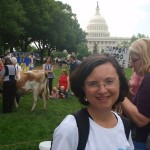
The sun shone brightly today at Upper Senate Park for the rally to protest the arrest of an Amish farmer selling raw milk. It was inspiring to see so many Real Food and raw milk supporters turn out, including so many with babies and children!

As Weston A. Price Foundation founder Sally Fallon Morell and rally organizer Liz Reitzig both said, many of us become passionate about real food when we become mothers. In my case, it was the desire to become a mom that led me to get off processed foods and soy and onto full-fat dairy and back to carnivorous ways after a near-vegan existence that left me depressed, infertile and suffering from a thyroid disorder and multiple skin problems.

I’m so grateful to the work of Fallon Morell, author of Nourishing Traditions, and to all the people like Reitzig of Grassfed on the Hill, people who spend so much time raising awareness and working as activists so that people can choose what to put in their bodies without their healing food being legislated away.

A full report on the rally will have to wait until tomorrow, but I couldn’t wait to share a few great photos, including of the cow whose milk was imbibed as fresh as can be by organizers and participants. For more details, see http://www.facebook.com/grassfedonthehill or www.grassfedonthehill.com

Me and the cow on the Hill

Organizer Liz Reitzig and Weston A. Price Foundation president Sally Fallon Morell

What a crowd!

Chef and holistic health counselor Monica Corrado

Liz Reitzig acted as emcee for the rally and the cow-milking, too!

Share

When life gives you chocolate, make coconuts: Fun Food Friday
Friday, May 13th, 2011

We went to an Easter egg hunt that had candy prizes. We don’t eat candy. My son knows to save it for the Switch Witch, who will “magic” it into fun toys or craft supplies.

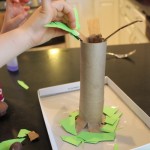
But this time, we did some magic of our own. The chocolates looked so much like coconuts, we made our own tree! And an accompanying mushroom. Thank you, Tacky Glue and paper clips, for turning candy into craft.

The colored jelly beans, rest assured, were still enough for the Switch Witch to take and leave the boy some good Easter booty.

Coconut tree in progress -- two toilet paper roles, strips of a cardboard box, and scrapbook paper on a shoebox top.

The completed coconut tree! (With mushroom companion)


Coming in for a close-up!

Mushroom made from chocolates. Maybe it goes in a different type of forest, but so what?
Share

Farm Rally coming up: Leave our milk alone!
Thursday, May 12th, 2011

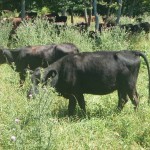
Grassfed cows

I’m so excited about Real Food right now! I’m about to head to an event at Restaurant Nora (“America’s first certified organic restaurant”) with Robyn O’Brien, author of Unhealthy Choice: How Our Food is Making Us Sick and What We Can Do About It.

And on Monday, I’m going to attend a rally to protest the FDA spending time and resources on criminalizing raw milk farmers.

Here is the press release for full info. If you care about protecting our right to eat the food we want direct from our farmers, I hope to see you at 10 a.m. in Upper Senate Park on Monday, May 16!

Media Advisory from Grassfed on the Hill
Contact: Liz Reitzig: liz.reitzig@verizon.net or 301-807-5063

During Budget Crises Feds Use Tax Dollars to Sting and Raid Amish Farm Over Milk
–Consumers Rally Against Misspending of Tax Dollars

Washington DC—May 11. Members of a DC area buying group, Grassfed On the Hill, joined by people across the country, are furious with the aggressive treatment of peaceful Amish dairyman Dan Allgyer and the use of taxpayer money to prosecute him, especially during a budget crisis. Allgyer, who supplies the group with fresh milk and other farm produced foods, has been served by the Food and Drug Administration (FDA) with notice of a permanent injunction against selling milk into interstate commerce, the result of a year and half long sting operation that included an agent planted in the buying club to collect evidence against Allgyer.

“It is absolutely inexcusable that FDA has spent time, energy and money conducting an undercover sting and armed raid against a farmer over distribution of milk.” says Liz Reitzig, one of the group’s organizers. “We contract with farmers we know and trust and engage privately with them. The FDA has no jurisdiction here, and it’s time we stand together and demand that they stop treating our honest farmers like hardened criminals.”

Grassfed on the Hill has organized a Capitol Hill rally in protest, where they plan to milk an actual cow and drink the fresh milk. The rally, planned for 10:00 am May 16th at Upper Senate Park in DC, is expected to draw hundreds of raw milk advocates.

For additional details: http://www.facebook.com/grassfedonthehill or www.grassfedonthehill.com

For additional details on fresh milk see www.realmilk.com

For a list of raids against small farms in recent years http://grassfedonthehill.com/government-overreach/

Share

Liver pate and grain-free almond “bread”
Wednesday, May 11th, 2011

Although I have been doing most components of the GAPS diet for almost 4 months, I had not been eating organ meats until recently. When Dr. Celena Hadlock asked about my organ meat consumption in a phone conversation as one of her first questions and when I saw that Monica Corrado has begun teaching classes locally on liver, I knew I just needed to get on board in order to fully heal my gut and regain my strength and overall health.

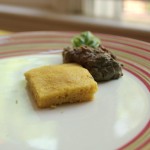
So I ordered chicken livers from my farmer for delivery the following week, defrosted them, and just last night made my first batch of liver pate. It is quite good!

Thanks to Kimberly Hartke’s recipe at Hartke is Online! I forgot the fresh parsley even though I have it growing on the deck! But it’s great anyway.

I just sauteed onions in lard from my farmer, put them in the Vitamix and then cooked the liver on both sides for a few minutes with salt, pepper, sage, rosemary, thyme, basil, oregano and garlic. I mixed it all up (okay, I added a little olive oil) and, voila!

Chicken liver pate with almond flour "bread"

I’ve been eating the pate with the grain-free bread in the Gut and Psychology Syndrome Diet. The recipe is more or less three simple ingredients:

2 cups almond flour

1/4 cup coconut oil or another healthy fat

2-3 eggs (depending on size and whether or not whites are used)

Ideally, you would soak your own almonds overnight in sea salt and then dehydrate them for optimum digestability. This time I just used Bob’s Red Mill almond flour.

I don’t use much of the egg white since I’m sensitive to it, so my bread looks extra yellow. I also add at least 1/2 tsp sea salt.

Then, if I want to make a savory bread, I add pressed garlic, a little more salt, rosemary, basil and oregano.

If I want more of a “dessert” type “sweet” bread, I add cinnamon, nutmeg, clove and vanilla and almond flavorings (alcohol-free from Frontier). I’ve also done a variation with carrot and apple for a “carrot cake.”

The thicker I made the “bread,” the longer it needs to bake or the quicker it should be eaten (within a day or two). If I cook it very thin (usually just in a baking dish well greased with coconut oil), then it’s more like the cracker here. The coconut nut oil gets frothy as this bread bakes, but it settles back down upon cooling.

I’ve been doing 325 degrees in a convention oven for about 25 minutes. It’s important to just eyeball and stick a fork in to see if it’s ready before you expected it to be!

Read more great posts about Real Food at Kelly the Kitchen Kop’s Real Food Wednesdays!

Share

Unfolding into nature: May Carnival of Natural Parenting
Tuesday, May 10th, 2011

Welcome to the May Carnival of Natural Parenting: Growing in the Outdoors

This post was written for inclusion in the monthly Carnival of Natural Parenting hosted by Code Name: Mama and Hobo Mama. This month our participants have shared how they encourage their children to connect with nature and dig in the dirt. Please read to the end to find a list of links to the other carnival participants.

***

I moved twelve houses down the block so that my son could have the woods as his backyard.

Okay, that’s a bit of an exaggeration, as there were a whole lot of other considerations to our intra-neighborhood move two years ago this July. But it’s true that backing up to county property was a big draw over the busy corner where yellow school buses were the most predominant form of wildlife. By contrast, this winter we had six deer looking to nibble on our remaining nubs of kale.

We are just entering our second summer in this house, and the effects of this location are pretty powerful for me. The ability to look out and watch the seasons change so clearly and profoundly makes me feel so much more in tune with nature. We don’t have acres in the country with a corn field, fruit trees and two huge vegetable gardens like my parents did when I was young, but we do have a nice slice of non-suburbia to retreat to every day. Since we’ve chosen to live in the hectic, Type A, chaotic area of Metro D.C., I hope the site of our home helps my son feel grounded in the natural world.

Even before we moved, I was determined to find my green thumb so my son would not grow up afraid of gardening. I hadn’t absorbed a whole lot of knowledge since we moved to the suburbs when I was ten, so it really has been a full learning curve for me and my husband both.

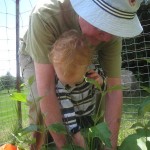
Picking a strawberry with grandpa in 2008

Dressing the part (age two)

Playing with water, er, container gardening at the old house (age two)

Now that we have a more secluded space (and since this summer, I’m not pregnant!), I’m finally breathing into filling that space not just with some veggie attempts, but with beauty, too. I knew I couldn’t plant any flowers in concrete-like clay beds, so just this past week I’ve gotten help to turn them over.

In preparation for that, for the past few weeks, my son and I have been planting all the wildflower and sunflower seeds I had lying around in pots to transfer when they are big enough. We also started lots of peas inside a few months back and some other veggies. Normally the type of mom who takes months to send thank you cards and says the phrase, “Yeah, we really should finish…” way too often, this year I am walking the walk and literally getting things off the ground by getting them in the ground.

I’ve also started participating in a Waldorf-based homeschool group called “Nature Place” so that I can start to really live into some daily songs and rhythms and seasonal rituals that will help us feel connected to nature in our daily lives and our larger lives. Maybe by the time my daughter is her brother’s age (5), I will have less to learn and more to just enjoy with respect to a home life of calm that is based in a reverence for nature.

As for food, this year we have fenced off the garden so hopefully we’ll feed ourselves more than the wildlife.

Our garden this year, in front of the forest back yard

Throughout the year, we buy about a third to a half of our produce from a local farm that delivers once a week, which I find works a little better for me right now than a CSA. Our meat, milk, and eggs come from a local farm (a collaborative delivery/drop service), and last year my son and went to visit Polyface Farm to see a truly sustainable operation. It’s important to me that he knows what a farm should look like and how cows, pigs and chickens can and should live: out in the open, on pasture.

Having been a vegetarian for a long time, I now think it’s important to support sustainable farms that produce meat, especially since the genetically modified soy and corn and the mass-produced grain I consumed by the boatload to my detriment as an undiagnosed celiac are not doing any favors for the planet, either.

My husband and son do occasionally eat out (I can’t right now because of the GAPS diet I’m on), but when we talk about meat and vegetables we bring into the house, we try to point out when we know the farmer. I also sometimes refuse to buy food if it comes from too terribly far away (especially if we can get them locally) or really isn’t in season. We’re not purists, but eating seasonally and locally is certainly the goal.

We seem to have had some pretty busy weekends lately and have been missing the farmer’s markets, but I hope that the summer months will find me there more than the grocery store. I love for my son to talk to the people who grew his food!

Although I thought I was a conscious consumer before I had children, it was the goal to overcome infertility that got me to make changes in my diet and it was the goal to grow a healthy family that has helped me find my way to making the kind of natural home that sustains me body, mind, and spirit.

***

Carnival of Natural Parenting -- Hobo Mama and Code Name: MamaVisit Code Name: Mama and Hobo Mama to find out how you can participate in the next Carnival of Natural Parenting!

Please take time to read the submissions by the other carnival participants:

  • Get Out!Momma Jorje gives reasons she doesn’t think she gets outside enough and asks for your suggestions on making time for the outdoors.
  • How Does Your Garden Grow?The ArtsyMama shares her love of nature photography.
  • We Go Outside — Amy at Peace 4 Parents describes her family’s simple, experiential approach to encouraging appreciation of nature.
  • My Not-So-Green Thumb — Wolfmother confesses to her lack of gardening skills but expresses hope in learning alongside her son at Fabulous Mama Chronicles.
  • Enjoying Outdoors — Isil at Smiling like Sunshine describes how her children enjoy the nature.
  • Five Ideas to Encourage the Reluctant Junior Gardener — For the rare little ones who don’t like to get their hands dirty, Dionna at Code Name: Mama offers tips for encouraging an early love of dirt (despite the mess).
  • Connecting to NatureMamapoekie shares how growing your own vegetable patch connects your child to nature and urges them to not take anything for granted.
  • The Farmer’s Market Classroom — Jenn at Monkey Butt Junction shares how the Farmer’s Market has become her son’s classroom.
  • Seeds — Kat at Loving {Almost} Every Moment’s hubby Ken shares his perspective on why gardening with their kiddos is so important . . . and enjoyable!
  • Toddlers in the Garden — Laura at A Pug in the Kitchen shares her excitement as she continues to introduce her toddler and new baby to the joys of fresh veggies, straight from the garden.
  • Nature’s Weave — MJ at Wander Wonder Discover explains how nature weaves its way into our lives naturally, magnetically, experientially, and spiritually.
  • Becoming Green — Kristina at Hey Red celebrates and nurtures her daughter’s blossoming love of the outdoors.
  • Little Gardener — Rosemary at Rosmarinus Officinalis looks forward to introducing her baby girl to gardening and exploring home grown foods for the first time.
  • Cultivating Abundance — You can never be poor if you have a garden! Lucy at Dreaming Aloud reflects on what she cultivates in her garden . . . and finds it’s a lot more than seeds!
  • Growing in the Outdoors: Plants and People — Luschka at Diary of a First Child reflects on how she is growing while teaching her daughter to appreciate nature, the origins of food, and the many benefits of eating home-grown.
  • How Not to Grow — Anna at Wild Parenting discusses why growing vegetables fills her with fear.
  • Growing in the Outdoors — Lily at Witch Mom Blog talks about how connecting to the natural world is a matter of theology for her family and the ways that they do it.
  • A Garden Made of Straw — Kelly at Becoming Crunchy shares tips on making a straw bale garden.
  • The Tradition of Gardening — Carrie at Love Notes Mama reflects on the gifts that come with the tradition of gardening.
  • Gardening Smells Like Home — Bethy at Bounce Me to the Moon hopes that her son will associate home grown food and lovely flowers with home.
  • The New Normal — Patti at Jazzy Mama writes about how she hopes that growing vegetables in a big city will become totally normal for her children’s generation.
  • Outside, With You — Amy at Anktangle writes a letter to her son, a snapshot of a moment in the garden together.
  • Farmer Boy — Abbie at Farmer’s Daughter shares how her son Joshua helps to grow and raise their family’s food.
  • Growing Kids in the Garden — Lisa at Granola Catholic shares easy ways to get your kids involved in the garden.
  • Growing Food Without a Garden — Don’t have a garden? “You can still grow food!” says Mrs Green of Little Green Blog. Whatever the size of your plot, she shows you how.
  • Growing Things — Liz at Garden Variety Mama shares her reasons for gardening with her kids, even though she has no idea what she’s doing.
  • MomentsUK Mummy Blogger explains how the great outdoors provides a backdrop for her family to reconnect.
  • Condo Kid Turns Composter and Plastic Police — Jessica from Cloth Diapering Mama has discovered that her young son is a true earth lover despite living in a condo with no land to call their own.
  • Gardening with Baby — Sheila at A Gift Universe shows us how her garden and her son are growing.
  • Why to Choose Your Local Farmer’s MarketNaturally Nena shares why she believes it’s important to teach our children the value of local farmers.
  • Unfolding into Nature — At Crunchy-Chewy Mama, Jessica Claire shares her desire to cultivate a reverence for nature through gardening, buying local food, and just looking out the window.
  • Urban Gardening With Kids — Lauren at Hobo Mama shares her strategies for city gardening with little helpers — without a yard but with a whole lot of enthusiasm.
  • Mama Doesn’t Garden — Laura at Our Messy Messy Life is glad her husband is there to instill the joys of gardening in their children, while all she has to do is sit back and eat homegrown tomato sandwiches.
  • Why We Make this Organic Garden Grow — Brenna at Almost All The Truth shares her reasons for gardening with her three small children.
  • 5 Ways to Help Your Baby Develop a Love of the Natural World — Charise at I Thought I Knew Mama believes it’s never too early to foster a love of the natural world in your little one.
  • April Showers Bring May PRODUCE — Erika at NaMammaSte discusses her plans for raising a little gardener.
  • Growing Outside — Seonaid at The Practical Dilettante discovers how to get her kids outside after weeks of spring rain.
  • Eating Healthier — Chante at My Natural Motherhood Journey talks about how she learns to eat healthier and encourages her children to do the same.
  • The Beauty of Earth and Heavens — Inspired by Charlotte Mason, Erica at ChildOrganics discovers nature in her own front yard.
  • Seeing the Garden Through the Weeds — Amanda at Let’s Take the Metro talks about the challenges of gardening with two small children.
  • Creating a Living Playhouse: Our Bean Teepee! — Kristin at Intrepid Murmurings shares how her family creates a living playhouse “bean teepee” and includes tips of how to involve kids in gardening projects.
  • Grooming a Tree-Hugger: Introducing the Outdoors — Ana at Pandamoly shares some of her planned strategies for making this spring and summer memorable and productive for her pre-toddler in the Outdoors.
  • Sowing Seeds of Life and Love — Suzannah at ShoutLaughLove celebrates the simple joys of baby chicks, community gardening, and a semi-charmed country life.
  • Experiencing Nature and Growing Plants Outdoors Without a Garden — Deb Chitwood at Living Montessori Now shares some of her favorite ways her family discovered to fully experience nature wherever they lived.
  • Garden Day — Melissa at The New Mommy Files is thankful to be part of community of families, some of whom can even garden!
  • Teaching Garden Ettiquette to the Locusts — Tashmica from Mother Flippin’ (guest posting at Natural Parents Network) allows her children to ravage her garden every year in the hopes of teaching them a greater lesson about how to treat the world.
  • Why I Play with Worms. — Megan of Megadoula, Megamom and Megatired shares why growing a garden and raising her children go hand in hand.

Share

Who wins the title: “Most Conflicted?”

Monday, May 9th, 2011

Before I had even cracked the spine of the book Good Enough is the New Perfect: Finding Happiness and Success in Modern Motherhood, it got soaked. For at least the fourteenth time, I’d failed to screw the top on my new glass water bottle on correctly, and it spilled all over the purse I took when I left the baby asleep with a sitter to buy organic Romaine lettuce and go to the Hair Cuttery.

“Good enough,” I thought, “does not cut it when containers of water are involved. Perfect is required. This book is wrong.”

But really, I knew that the problem was all about me: I hadn’t been paying attention when I was screwing the lid on while drinking and driving (water, that is). If I’d just focused on one thing at a time, there would be no soggy books.

That’s pretty much the message of the book:

Choose what is important to you. Pursue it. Let the other stuff slide. Happiness will ensue.

It makes a lot of sense, and I’ve been moving toward that kind of narrowing. Well, maybe it’s more like a re-seeing of things I complain about for how they actually do work toward my big goals rather than thwart other smaller goals.

I'm calling this (uncropped) self-portrait "good enough" because reminds me that I'd run a half-marathon that morning. And that I'm a mommy goddess.

The book also helped me see that I am not as conflicted and frustrated as I might be if I had expected to go back to work after having my first child. But I had gotten to the point teaching high school English where I knew I simply couldn’t do it and be healthy. My struggles with my thyroid and celiac disease had gotten me clear on the fact that I needed to follow a different path.

So even though I had been like a lot of the over-achieving, perfectionist moms in the book, I knew I would just have to let some things go if I was going to be healthy and get pregnant. Once I got pregnant, I was even more ready to be done working and just be home with my son.

The whole time, however, I’ve wanted to pursue my own interests and eventually a little work. I started a writing group when he was four months old, started tutoring when he was a year old, and started a chapter of Holistic Moms when he was two and a half. It seems sometimes like my interests have multiplied, and there are times when I wonder if I will ever balance being the kind of mom I want to be with being an individual who feels all her needs are met.

Reading about so many moms who continued to want to “have it all” after giving birth, though, I realized that most of my conflicts are not really conflicts. I am privileged and lucky to be able to stay home (even if earning money does feel really good), and most of my interests dovetail more than I give them credit for. This book showed me that there are a lot of internal battles I could be having but am not. I think I may indeed be close to embracing the “new perfect.”

The commitment to health and well-being that I made in 2004 remains. It’s okay that this is my top priority and that things like fashion (for me or my kids) fall to the wayside. If looking good starts to become part of my broader goal (which it might, since “beauty” is my 2011 catchphrase), then swell. It should feel fairly effortless and, in fact, fun if it really aligns with my values.

But for now, I’m just going to try to honor that food and health — for me, for my family, and for my community — are the things I care most about. So the choices I make will reflect those values, and I don’t have to feel bad about not pursuing things that don’t.

In this light, “good enough” does sound rather freeing!

Disclosure: As a member of From Left to Write book club, I received a copy of this book for review. All opinions are my own. You can read other members’ posts inspired by Good Enough Is The New Perfect on book club day, May 10 at From Left to Write book club.

Additional note: It seems appropriate to give a shout out to two other moms who live and breathe “making it work”:

Washington Post staff writer Brigid Schulte has written about motherhood and time management for the Post Magazine and is working on a book about it. Two days ago, on Mother’s Day, she published an article about flexible work arrangements and included a profile of Jennifer Folsom, who I know from The Enterprising Moms. Jenn was the winner last year of the Hot Mommas Project, of which I was a finalist.

Check out this great article, and let the Post know these are important issues to cover!

Share

Fun Food Friday: Breakfast

Friday, May 6th, 2011

Breakfast chez nous, most days (except I forgot the sauerkraut)

Last week I posted a photo of a lunch plate character in my piece on the new governmental recommendations about marketing food directly to kids.

I’ve decided to start a series of Fun Food photos on Fridays. Some may be characters; others might just be a shot of something I made that I never took the time to write about or that was so cool I need to share it again.

Here is the first installment: Breakfast of pastured egg, Wellshire turkey sausage, zucchini and spinach, along with ears of fish oil and acidophilus.

So much more interesting — and full of nutrients — than a bowl of cereal!

Share

Just take those sugary characters off the shelf
Saturday, April 30th, 2011

Long before I’d even come close to letting my son watch a Clifford video, his eyes lit up at the big red dog on the Cascadian Farms cereal box. Come to think of it, that was probably even before I ever let him eat any cereal.

(Any cereal always been gluten-free and character-free, and I’ve stopped buying boxes, now making my own granola from soaked GF oats. But I digress.)

The point is, even if you don’t serve kids a certain kind of food or even expose them to TV, their eyes seem to be programmed to bug out at characters planted in front of them by savvy, mind-reading food industry executives.

Well, if the food industry decides to follow new governmental recommendations, any food marketed to children under the age of 17 will have to meet at least a few criteria of healthfulness.

A working group with representatives from the Federal Trade Commission, the Food and Drug Administration, the Centers for Disease Control and Prevention, and the U.S. Department of Agriculture received direction from Congress to come up with recommendations, which they released yesterday.

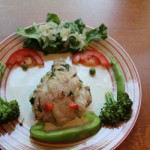
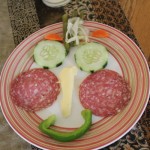
This is the kind of food character I feel good about: green pepper, cucumber, raw sauerkraut, carrot, asparagus cooked in bone broth, raw grassfed cheese and (well, this is processed) salami

Among the “proposed voluntary” recommendations are two principles for foods marketed directly to children aged 2-17.

Principle A indicates that food must contain at one ingredient that makes a “meaningful contribution to a healthy diet.” The list of “thumbs-up” options includes: fruit, vegetable, whole grain, low-fat or fat-free milk product, extra lean meat or poultry, eggs, nuts and seeds, or beans.

Clearly the word hasn’t gotten out to this group that full-fat dairy is a whole food, while reduced fat is not. As local chef, holistic health counselor and cooking instructor Monica Corrado points, out, when we eat full-fat foods, instead of processed foods, we feel more satisfied and eat less.

Principle B targets minimizing “the content of nutrients that could have a negative impact on health or weight.” On this list: saturated fat, trans fat, added sugars, and sodium.

Again, a traditional foods perspective would point out that fats are not all created equal, nor are salts. As I’ve said before, naturally-occurring whole-food fats like butter, lard, and coconut oil are beneficial for children’s bodies and brains, and real sea salt contains vital minerals. As the Weston A. Price Foundation has pointed out in its criticism of USDA dietary guidelines, the idea that fat and salt are just simply bad is a myth (which will be busted at the WAPF 2011 conference in Dallas!

We run into problems when we substitute healthy fats and mineral-rich sea salt for industrialized, factory-made fats like canola oil and refined salts. These substances are not real food once they have been stripped of their nutritional value, or are heated and processed in such a way that they have become unrecognizable to our bodies.

This anti-marketing initiative is, however, at least creating awareness, which is usually a good thing.

When an industry spends over $1.5 million a year trying to get kids to clamor for a certain cereal or snack, it might be hard to believe that it will undertake these “voluntary efforts.” But, with everyone talking about the childhood obesity epidemic, companies may just comply to look like they are doing their part, even if they keep producing food laden with sugar, dyes and chemicals — simply sans the snazzy characters to shill them.

I have so many photos of fun folks made out of real food, I think I will start a new Fun Food Friday tradition. Check back next week for another pic, whether I have a food-related item to write about or not!

Related link: FTC Guidance Documents with research and background

My article on the topic at the Washington Times Communities Family Today in my column, Reading Ingredients: Tales of a Health-Conscious Mom

Share