Archive for the ‘Activism & Politics’ Category

A weekend of holistic health and blogging

Sunday, October 23rd, 2011

A tale of two conferences

I’ve had a split personality this weekend.

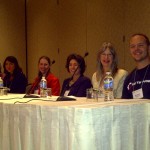
Much of my time has been spent at the wonderful blogging conference, Blogalicious. Since I first arrived at the conference Friday morning, I’ve met great people, caught up with friends, and learned a ton about social media and media resources in general. A favorite session so far was a panel on finding “balance” led by Jessica Smith and Jeannette Kaplun. I’ll do more of a recap later this week for TheDCMoms.com.

Most of the Blogalicious attendees are staying on site at National Harbor, but I still have a baby who nurses through the night, and I live only nine miles away. I also have an extremely restricted diet and feel a whole lot better if I cook my own food. So I’ve spent mornings and evenings here at home with my family.

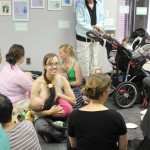
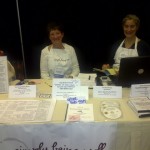
Take Back Your Health Conference expo hall

But the split doesn’t stop there. This weekend is also the inaugural Take Back Your Health Conference right in my backyard in Arlington, Virginia. Organized by an amazing young woman who was so sick she had to leave college but then found healing through diet and lifestyle changes, the conference has a great line-up of giants in the field of holistic health. So I spent some of today there, too.

It’s been interesting to be at the blogging conference thinking about my priorities and passions and then to see so many people engaged in those passions at the health conference. And then to come home and live some of those passions — at least attachment parenting and healthful eating, anyway. A few other aspects of healthy living are taking a back seat with so much shuttling around.

Think I’ll go have a mindful moment with my partner now!

That is, if my daughter doesn’t wake up first.

Share

Real Food heals: Blog Action Day

Sunday, October 16th, 2011

When my nutritionist friend suggested I try integrating some animal protein and animal fat back into my diet, I was offended. Didn’t she know how bad it was for the earth to waste all those resources on raising animals instead of vegetables and grain? Didn’t she know that a low-fat diet was healthier?

Since I was grappling with infertility, depression, cystic acne and digestive issues and she had recovered from Chronic Fatigue Syndrome and infertility to be midway through a healthy pregnancy, I decided to give her way a shot. It turns out that she knew a lot more than I did.

Unlike pale yellow battery eggs, pastured eggs are the color of a richly orange setting sun.

The processed soy I was consuming three or more times a day was terrible for my health, and it wasn’t good for the environment either. Once I added animal products back into my diet — slowly at first — my periods came back, my mood improved, and I felt stronger than ever before.

What followed was a move to gluten-free and dairy-free living and better mental and physical health than I’d ever known.

And, later, a baby.

I’ve now had two easy pregnancies but twice found my system struggling in the postpartum year. Both times I’ve improved dramatically by cutting back or cutting out all grains, starchy vegetables and sugar, even fruit.

Like more and more people I know, I’m following the GAPS diet. Designed by Dr. Natasha Campbell-McBride with a nod to the Specific Carbohydrate Diet, GAPS stands for Gut and Psychology Syndrome. It has helped children on the autism spectrum, people with Crohn’s Disease, and so many more. I have become a believer that my body and mind were poisoned by all the gluten-full food my unknowing Celiac Disease self ate for so long and by so much processed food.

Now I keep my tummy happy by eating only Real Food I make myself. A staple is bone broth, or stock made from the bones of pasture-raised chicken and beef from sustainable farms. If animals were all eating the foods they were designed to eat — grass for cows, bugs and such for chickens — there wouldn’t be much of an environmental argument against being an omnivore. Maybe there are too many people in the world to feed them all on small family farms, but I can eat that way.

To get my fresh, vital phytonutrients, I use a juicer most mornings, using as much local and seasonal produce I can. Although I used to eat salad three times a day, until I can handle the fiber of raw foods again, juicing is the best I can do.

All my efforts come from the belief that food is medicine. There is nothing that mainstream medicine could do for me that would fix my problems if I didn’t address them at the source through nutrition. My body had 30+ years of eating the wrong food for it (and often, not good stuff for anyone), and it may take a while to repair itself, especially while breastfeeding and slowly returning to non-pregnancy hormone levels.

In November, I will hear Campbell-McBride speak about GAPS and hear other Real Food renegades bust myths at the Weston A. Price Foundation conference in Dallas, Texas. I hope everyone who cares about food for health and about the health of the planet will join me!

Related posts:

GAPS Diet update

Why I’m not a vegetarian anymore

Gluten-free expo showcases products galore

Read more posts about food at Blog Action Day 2011!

Share

Support VBAC in October!

Wednesday, October 12th, 2011

When I first met my friend Elaine, she spoke warmly of her two homebirths. I had just one child who was born via c-section, which saddened me. Now I am the proud mama of a home VBAC — Vaginal Birth After Cesarean, or HBAC. And today Elaine is writing at TheDCMoms.com about homebirth.

Here are some upcoming resources to learn more about VBAC and to support those who are working hard to make VBAC a viable option.

Fundraiser for ICAN of NOVA (International Cesarean Awareness Network of Northern Virginia)
Go to California Tortilla on Wednesday, October 12. Write “ICAN of NOVA” on your receipt and put it in the box so that the chapter gets proceeds.
Fair Lakes – 12239 Fair Lakes Parkway, Fairfax (all day)

Arlington – 2057 Wilson Blvd., Arlington (all day)

Alexandria – 301 Swamp Fox Road, Alexandria (all day)

Oakton – 2930 Chain Bridge Road, #102, Oakton (5-9pm)

VBAC 101 Class

Capitol Hill Yoga on Sunday 10/23 from 3:00 to 5:00
p.m. The class covers:

Everything you need to know about vaginal birth after cesarean such as: Are you a good candidate for a VBAC? What are the risks and benefits of VBAC? What can you do to increase your chances of having one? Where can you find mother-to-mother support as you pursue your VBAC? Workshop facilitator Barbara Stratton is a former doula and is currently the national VBAC ban chair for the International Cesarean Awareness Network (ICAN) as well as the founder and co-leader for ICAN of Baltimore. $40 per couple. Interested women can contact me at womancaredoula @ comcast.net

Baltimore ICAN Meeting

October 13, 7pm at
Butler Volunteer Fire department, 15019 Falls Rd Butler MD 21023. The hall is stroller accessible and
handicap accessible. Topic will be on Holistic Midwifery with midwife Lori Serabo.
http://www.icanofba ltimore.org/

ICAN of NOVA Meeting

Wednesday, October 19, 2011 from 7 PM (until 10 PM). At the City of Fairfax Regional Library.

http://www.icanofnova.org/articles/Meetings_&_Events and on Facebook

Share

Holistic Moms to host “Traditional Diets” guru

Friday, September 9th, 2011

The first time I heard of the Weston A. Price Foundation was the day after Thanksgiving 2003. My face was full of acne, my belly was full of gas, mind was muddled, and I hadn’t had a period in almost three months. Not exactly the picture of health.

But I was still offended when the nutritionist I spoke to suggested that my vegetarianism — near veganism — might have contributed to my gut and skin problems, my fertility, and my depression. How could this woman call herself a nutritionist? Meat was so bad, I thought.

Still, her five-month pregnant belly and her regained health after years of chronic fatigue syndrome convinced me that her wisdom might be valid.

Although I wouldn’t actually purchase Sally Fallon’s Nourishing Traditions cookbook for another three years, I did start to eat eggs and full-fat dairy, and I stopped eating soy for breakfast, lunch, and dinner. I ovulated two weeks later and began having regular cycles from then on. Soon after, I started eating meat again, and my health improved.

A traditional diet, I believe was key to my healing, including from the the thyroid disorder I was diagnosed with just after that meeting with the nutritionist. Now, eight years later, I have two children and a much better sense of health and wellness.

I’m so grateful to have learned about this approach, and it’s wonderful to see so many people writing about this way of eating, including Kelly the Kitchen Kop and Jenny at Nourished Kitchen. One of the other top Real Food bloggers is Kimberly Hartke of Hartke Is Online! Kimberly also serves as the publicist for the Weston A. Price Foundation, and she’ll be speaking on September 15 to the Arlington/Alexandria chapter of Holistic Moms Network. Her talk, “A Respect for Tradition: How Looking Back Can Show the Way to Wellness” will address some of the following questions:

  • How can the wisdom of traditional diets address modern-day health concerns?
  • What connections between health and nutrition did pioneering dentist Weston A. Price find when he traveled the world in the 1920s, and how can we benefit from what he learned?
  • What is so great about raw milk?
  • How come obesity rates started rising when low-fat diets came on the scene?
  • What are healthy fats and why do we (and our children, especially) need them in our diets?

The presentation will be the focus of the group’s September meeting, which is 7-9 p.m. at 716 S. Glebe Road, Arlington, Virginia on Thursday, September 15, 2011. For more details, visit the Holistic Moms blog.

Share

Interview with nutritionist Dr. Keith Ayoob

Wednesday, July 13th, 2011

I was invited to participate in an interview recently with Dr. Keith Ayoob, a nutritionist who appears regularly on “Good Morning America,” CNN, and ABC news and who writes for SchoolMenu.com. One of my favorite articles of his is called “D Pressed;” it highlights the importance of Vitamin D to mental health.  Anyone familiar with Julia Ross’s book The Mood Cure knows that a Vitamin D test is essential if you’re dealing with any mental health issues, and with most physical ones, too. Dr. Joseph Mercola has a great Vitamin D Resource Page on his website, Mercola.com.

When asked what foods he recommends for children, Dr. Ayoob said he’s always looking to get into people what they might be missing. Vitamin D is one of these important nutrients. Although some foods are fortified with Vitamin D, the Weston A. Price Foundation cites high-quality cod liver oil as a key source of this fat-soluble vitamin and raises concerns about synthetic forms of Vitamin D in this article.

Of particular concern to Dr. Ayoob was that all children and adults start their day with breakfast. Children who eat breakfast do better in school, he said, and everyone who eats breakfast is less likely to get tired in the afternoon. “You cannot have a healthy diet without breakfast,” Ayoob asserted.

Parents can get creative with breakfast, he said. Last night’s leftover chicken drumstick is a fine source of protein and has fat that will leave a child sated, the “stick-to-your-ribs” quality. In hot summer months, families might opt for cooked foods in the mornings and cooler foods in the evening.

When we do fire up the option, he urged, we should “over cook,” not in quality but in quantity. Don’t warm up the whole house for just a few baked potatoes; rather, plan ahead to cook many things at once that you can eat throughout the week with less effort.

This is a great strategy, but start early! I have been known to let dinner get way too late because I was determined not to start the oven until I had a chicken, four vegetables and my grain-free almond “bread” to bake all at once.

Another summer consideration is hydration. Dr. Ayoob wanted to remind parents that you don’t only drink water; eat your water too! Cool off with fruits and veggies that have high water content, like melons and cucumbers. Of course, many of these foods (including berries, peaches, apples, celery and green pepper) must be organic because they are on the dirty dozen list of worst produce when it comes to pesticide residue.

Back to time-planning, be sure to prioritize eating as a calm, community experience. Meals are a time to model social skills and manners. The more distractions kids have, the harder it is to enjoy eating. Even if breakfast seems to take only 6-7 minutes to eat, Dr. Ayoob said, plan for a 20-minute eating experience to show that you value healthy eating and family time as an important part of your day.

When I asked Dr. Ayoob about the importance of soaking grains for optimum digestibility, he suggested eating a piece of citrus with cereal instead. Dr. Ayoob’s interview was sponsored by General Mills, a company that produces many varieties of what Dr. Ayoob referred to as “ready-to-eat” cereal, or boxed cereal, including many gluten-free brands. This study shows that 86% of parents think cereal is a healthy breakfast choice, and it links to FAQ pages extolling the virtues of cereal and to the website cerealbenefits.com

In contrast to the concerns I raised about extrusion (the industrial process that creates boxed cereals out of making a slurry that is then heated at high temperatures) at the beginning of our interview and in posts here and here (concerns that were elaborated on in a recent post at Nourished Kitchen), Dr. Ayoob expressed a very positive outlook on whole-grain boxed cereal as a good source of nutrients. He first referenced it served with low-fat and fat-free dairy as part of a healthy breakfast.

When asked more about fat, Dr. Ayoob did admit that fat can provide satiety, and in later references to dairy he offered whole milk as a fine solution, though he did not support the drinking of raw milk, which had been in the news shortly before our interview.

He explained that his main concern when addressing issues of obesity is the number of calories. Having more than 25-30% of your calories from fat — a concentrated source of calories — would require one to reduce portions, Dr. Ayoob said, adding, however, that it’s important for children to get enough calories and enough protein in the morning. He suggested that keeping a hard-boiled egg in the fridge is a good way to have a quick source of protein for kids.

Overall, Dr. Ayoob was most interested in getting across the point that it’s important to eat breakfast of some kind for many reasons, including to stave off obesity.

For the full picture, check out our interview here!

widescreen format for Citybuzz – 566×367 works well for citybuzz blog posts.

For more on what it means to be into Real Food, as I mentioned at the beginning of my interview, visit Kelly the Kitchen Kop’s Real Food Wednesday blog carnival


http://kellythekitchenkop.com/2007/12/book-suggestions-on-nutrition-and-more.html
Share

Gluten-free expo comes to D.C.: win free entry!

Thursday, July 7th, 2011

Going gluten-free in 2004 was part of my holistic effort to bring my body into balance and heal my thyroid from Graves’ Disease, autoimmune hyperthyroidism. My goal was to get off anti-thyroid medication and get healthy enough to get pregnant. Although I also hoped to go off anti-depressant medication, I didn’t really expect that a gluten-free, dairy-free diet and other alternative health measures would also make such a dramatic change in my mental outlook.

That year of diet changes and nutritional supplements ended with me in a healthier, happier place than I’d ever been.

But gluten-free is not enough for me. I reduced carbs dramatically after some rough gastrointestinal episodes shortly my son was born in 2006. It became clear that I could not tolerate corn and that even limiting rice and other starches helped my gut and my psyche, especially since my body was so challenged by recovering from a surgical delivery and from exclusively breastfeeding my son until he became interested in food around one year.

My nutritionist introduced me to the Specific Carbohydrate Diet (SCD) and the Gut and Psychology Syndrome diet (GAPS), protocols that limit sugars to monosaccharides and that eliminate all grain and starchy vegetables. Yesterday, Jenny at Nourished Kitchen blog posted a great intro to GAPS: Why everyone is talking about the GAPS diet and 5 resources to get started.”

As my son grew,  I started baking to provide him gluten-free substitutes for preschool and parties, but he wasn’t the only one to eat them! The more I ate of these breads and cookies — even if they used only a little maple syrup — the worse I felt. Finally, this past February, I felt I had no choice but to commit to the GAPS diet.

I generally prefer grown foods to processed foods, but caution must be exercised in moving from the introductory phase of the GAPS diet to the full GAPS diet. A sensitive gut can only take so much acid, sugar, and fiber.

There was good progress until peaches showed up at the farmers market and yellow cherry tomatoes that taste like sunshine popped up in every corner of our garden. It’s been hard to resist the fruits of the summer harvest, but my tummy today is telling me that I’ve moved too fast. For people like me whose gut has experienced such damage, patience needs to be had before one can tolerate the sugar and fiber of fresh fruits and vegetables in any substantial quantities.

Many approaches to gluten-free living simply substitute gluten-free grains for gluten grains. So I’m interested to see what the vendors and experts will say at tomorrow’s Gluten-Free Expo sponsored by the Celiac Disease Program at Children’s National Medical Center. The issue of Living Without magazine where I learned about the expo contained an article about SCD/GAPS, so I’m hopeful that people are getting on board the grain-free, low-sugar bandwagon.

The expo is 4-8 p.m. and is followed by a cocktail reception, both at the Embassy Suites downtown. Details and tickets are available at  www.DCGlutenFreeExpo.com. There will be over 50 vendors talking up and/or selling their wares (some at a significant discount), and participants can learn more about the gluten-free community in and around D.C.

Submit a comment below about what diet works best for you and enter to win a free entrance to the expo ($10) and the cocktail party ($75).

Share

I’m a top Mental Wellness blogger!

Tuesday, June 21st, 2011

I’m pleased to announce that I made it into the Top 25 Mental Wellness blogs at Circle of Moms. Thanks to everyone who voted. More details to come!

Share

D.C. to host world premiere of film about war on family farms

Tuesday, June 14th, 2011

If you consider yourself a locavore, a supporter of family farms, or just a parent concerned about your children’s health and the future of the planet they will inherit, be sure not to miss the world premiere of Farmageddon–the Unseen War on American Family Farms, a mom-created film that documents the FDA’s raids on small  farms.

For more information about the film and its D.C. run, see the the Weston A. Price Foundation’s this press release. Read more about the the film’s origins and its creator, Kristin Canty (who will be in town for the premiere weekend)  at Hartke is Online!, the blog of WAPF publicist Kimberly Hartke.

The film will run locally from Friday, June 17 through Thursday, June 23. Showtimes are 3, 5, 7, and 9 p.m. on weekdays and 1, 3, 5, 7, 9 p.m. on weekends. The running time is 90 minutes, and the film is not rated.

There are a few exciting fundraiser events that will feature great speakers (and, in some cases, great food!) including Friday night’s opening gala, Saturday evening’s Grassfed on the Hill fundraiser, and Sunday afternoon’s event with the Northern Virginia Wholefood Meetup Group. Get your tickets to these events before they sell out!

For general admission tickets, contact West End Cinema, located at 2301 M Street NW Washington, DC 20037. The box office phone number is 202-419-3456. Tickets go on sale June 14.

Share

The transition begins: Waldorf to public school

Sunday, June 12th, 2011

Just how many different people can I be in my head in one day? Well, at least two solid positions are staking claim to my mental landscape. One is incredibly sad that yesterday was my son’s last day at his Waldorf school, and the other is very excited for our family to become part of the local public school community.

So why the ambivalence?

E’s Waldorf school — where he spent a year in parent-child, a year in the three-day “kindergarten,” and this year, what is designed to be the first of two years in five-day “Oak Tree Kindergarten” — is a beautiful place. I love that he has been able to unfold, as they say, free of expectations to “achieve” or perform in any particular way.

The boat my son loved making at his Waldorf school, and his book of colorings. His symbol this year was a seashell.

Yesterday, after we admired the boat he made (and loved making!), we looked through his book of coloring from the whole year. I was in tears seeing how he’s gone from abstract scribbles to intricate drawings with clear storylines all on his own, with no direction or suggestions. At this school, he truly is learning for the love of the experience, not on anyone else’s timeline or following anyone else’s agenda. What a gift.

Waldorf education has a reverence for nature and a foundation of being in tune with the seasons. He starts the morning outside, playing for almost an hour no matter what the weather. If he’s staying until 3:00 (as opposed to noon, when the regular 5-day program ends), he plays outside again before lunch and for another 20 minutes or so before pick-up time. The playground is small, but it’s lovingly tended, and the children make use of logs and wood chips and the sandbox — and their imaginations — rather than relying on a lot of equipment, other than a small slide and a climbing wall.

Beyond questions of space and “curriculum,” it is just so clear that he is loved at this school. His teachers are so kind and thoughtful about their interactions, and he knows his place in the community. The class has 16 children, each of whom has a symbol and an “acorn child” likeness doll. He was so excited to report to me over the course of the fall whose child appeared and when, and wearing what clothing.

On the last day of school, his teacher gave each child a small book with their symbol on the front and a simple series of four pictures inside. It is such a quiet expression of love, of celebrating the simple wonder of something like flying a kite and the child’s discovery of the joy therein.

His teacher also gave the children “gems” on the last day and gave a special one to my son to remind him to take a nice rest every day. The teacher knows E stopped napping at age 2.5 (he is now 5.25) and that I fear the summer with a boy who won’t nap and a baby who has become increasingly resistant to going down for a nap unless she’s driven. (Let’s hope it a phase.) I’m grateful to the teacher for this gift and for all he and his assistants have given us this year.

I am in tears. How can I take my son away from this beautiful environment to a bigger class where academic expectations might trump magic and beauty? My heart breaks every time he talks about how he’s going to be a Tall Oak next year (when he turns six), and how he’ll get to make a sword. This year, he loved sanding his little boat and was apparently quite taken with the process, I’m told by teacher and son alike. He was the first one to finish his boat, something he seems to take great pride in. I feel awful for keeping him from more memories like this in the beautiful spaces that are his classroom and school.

But, he is not my only child, and mother is not my only role. Sometimes I wish I could approach it that way, but I know it’s no use trying to push a square peg into a round hole. I need to pursue writing and to put a significant amount of time into my health and wellbeing in order to be the best possible — and most sane — mom I can. This means I need some amount of childcare, and I need to prioritize expenses.

His school is a large expense. We’ve had him in three days of the school’s 12-3 p.m. Afternoon Program for the past two years, and while the hourly breakdown is comparable to babysitting, it adds up to a whole lot of extra money for time with just one child. I now have two. I think the program has served him well with its calm routine, and I don’t relish long summer days that depend on my willpower and energy in the face of not having any control over whether the baby will cooperate with a nap or scream unless I put her on my back.

However, we would not be able to rationalize the expense of the Afternoon Program next year and also pay for the regular tuition and for some childcare for the baby so that I can do a little work, exercise, and get to appointments. Without the Afternoon Program, my son would be home every day at noon, which means my daughter and I would have less than three hours each morning together and that her nap would probably have to once again revolve around her brother’s schedule. That, or (and/or?) her brother’s afternoon schedule might need to revolve around his sister’s need to nap. And in the middle, I will have next to zero time to do much for me, let alone house chores or preparing food for my high-maintenance diet. I expect we’d devolve into my staying up late and stressing my adrenals ever further.

I realize that there are things I can and perhaps ought to let go. However, one area I will not compromise on is food: there is no microwave in my kitchen, and very little that we eat that comes out of a container. We do not eat fast food, and we rarely go out to eat. (With the exception of a luncheon at the organic oasis of Restaurant Nora and a trip just tonight to Food Matters since it will be closing soon, I haven’t eaten at a restaurant since I started the GAPS diet at the beginning of February, over four months ago.)

My son always has — and will have — a healthy lunch, and until recently I made all the gluten-free substitutes I had to send for his school snack: bread on Tuesday and Wednesday and a muffin on Thursday. So even though his school serves only organic food, it doesn’t work well for us as celiacs.

At his new school, the day will start at 8:00 instead of 8:30, which might be a little hard at the outset, but the earlier start means his father will be able to take him to the bus, or, more likely, right to school (just two quick miles away through neighborhoods) before heading to work. This means I can continue to prepare a healthy breakfast and start to provide a calm morning environment since I will not need to get myself and the baby out of the door at the same time.

I’m not sure yet if I’ll pick E up from school at 2:41, carpool with a neighbor, or let him take the bus home, but he will be done at the same time every day, and it’s my hope that I can use some of the early afternoon time to prepare at least part of dinner so that I can be more present with him when he returns.

I hope this new schedule benefits my son, who will get time with a less harried mom and time with his dad in the morning. I hope it benefits my daughter, who will get to have a nap on her terms and (if she ever starts eating food) breakfast at home without being rushed. I hope it benefits my husband, who will get more QT with his son in the mornings and get out the door at a consistent time. And I hope it benefits me by letting me eat without stress and thus more fully digest my food and heal my gut, which I know is key to all my other health issues, physical and mental.

But it’s not just about schedules and distance from home, as compelling as those are. No, I would not entertain any of these logistical perks if there weren’t other reasons to feel good about this elementary school. But there are. A lot of them.

The school uses a portfolio-based assessment instead of grades. The curriculum is hands-on, an Expeditionary Learning approach that is patterned after Outward Bound. Students participate in multidisciplinary units that are several weeks long. The K-1 (multiage) classes have tables and centers but not desks. The school principal never once mentioned standardized tests on the tour I took, and during the open house my husband attended, she said something to the effect of test scores not being a reason to come to this school.

She refers often to the school as a “community,” and it’s clear from the beautiful grounds and the lively gardens that it’s not just talk.  Last year the school donated 100 pounds of lettuce to Arlington Food Assistance Center, and I’m told the children also enjoyed their harvest in salads at lunch, which is served in classrooms rather than a cafeteria. I know several people who send their children here and love it.

Everything the principal has said on tours and in conversation with me conveys an openness to seeing each child as an individual. The school utilizes the Responsive Classroom model that includes a community meeting at the beginning of every day. So much talk is not very Waldorf, but I do think it will serve my chatty son well.

The playground is large and open. There is a tricycle path, logs for climbing on, and, when I dropped off my son’s paperwork in April, I noticed a group of girls digging in the dirt with pails and shovels. The school sits next to a nature center with which there are ongoing talks about more collaboration and married landscape construction. (I understand these things don’t move like lightning, but at least the desire is there!)

All K-1 classrooms have doors to the outside, and children go out twice a day (or at least get to go to the gym in bad weather). I’m expecting that my husband will walk E to the school from down the street so that he will have exposure to the elements every day. Oh, and I think I will take E on Fridays so that I can attend the whole school community meeting. Maybe then I will take the baby to the nature center or for a walk on the nearby bike trail after that.

Assuming we are happy enough to keep him there, E will have the same teacher for grades two and three and then will loop again with the same teacher for fourth and fifth grade. The continuity is something I value. Teachers in Waldorf schools stay with the same group of children for years.

I also like that E will be getting music and Spanish in school, and the art in the hallways is beautiful. You can tell the children all had the same assignment, but they were given the freedom to find their own way into it. I didn’t see photocopies of the same sheet just colored differently.

But beyond all these assumed-to-be-great things about this particular school, I am also compelled to join the ranks of public schools because I think it’s important from a social justice perspective. I want to be an advocate for all children, to give them the opportunity to have healthy choices. Last night I attended the documentary What’s on Your Plate at Barcroft Elementary School as the culmination of the PTA-organized spring Farm to Table Week. It’s exciting to see people bringing awareness of healthy eating and sustainable farming to public schools, but it’s not going to happen without involved parents. I feel I ought to be one of them.

I also don’t want E insulated from the community in which he lives. He is certainly exposed to many cultures and languages at the Waldorf school, but it’s not the same as the rest of the county. Having taught high school nearby and having worked on issues of diversity in honors vs. regular classes, I feel it’s important for my son to get to know a wide variety of people and to learn from an early age that people don’t all think and talk the same.

Of course, I was comforted by a lot of sameness at the Waldorf school. If you’re a parent who eschews most TV and electronic media, it’s great to know that other parents around you do, too. Being on the same page with people is great, and I honestly do think the world looks prettier without big plastic toys or cartoon characters on backpacks. My son is a sponge, and he does notice everything, and sometimes even the smallest exposure translates into wanting things I don’t want him to have or even know about.

But I can’t keep him in a bubble forever on that front, and I can make choices I feel good about at home. I just need to stick to them! And my hope is that our new schedule will make it more possible for me to interact with other Waldorf-inspired friends and homeschooling moms so that I can make my home environment more in line with my values. This is quite a learning curve!

On that topic, I should at least mention that it is not for lack of interest that I’m not homeschooling. Sometimes I think that would be ideal. I just don’t think it’s right for my family at this time, mostly because of my temperament and some because of my son’s super-social nature and his intense early attachment to me that seemed to call for interaction with other adults. I do feel that he benefits tremendously from interacting with other caring adults and with other children in an organized setting on a daily basis.

I still don’t think it would be the right dynamic for him and for me, and it would be hard for me to manage with the baby since I still don’t feel like I know a fraction of what I’d like to know about creating a home. However, if he struggles mightily with this transition or if I feel that public school is wringing out his sense of fantasy and magic, I will consider it until there’s a spot open at the Waldorf school or until we decide it’s time to try public again.

Although I do worry about him having sensory overload in the chaotic and cluttered public K-1 classrooms, E has been in plenty of mainstream settings with camps and other programs, and he always does fine. He usually asks to go back!

On Thursday, I kept him home from his penultimate day of school because he fell out of bed the previous night and split open his lip, which was still incredibly puffy in the  morning. I expected that I would skip visiting Barcroft that day even though I wanted to take photos to write an article about Farm to Table. Around 11:30, the baby had woken up and nursed, and I decided we’d just go ahead and go anyway.

On the way in, we saw our friend who works there part-time, which was a treat. In the cafeteria, E was happy to try snap peas with peanut sauce and yellow squash with a yogurt dip while I chatted up the guest chef and snapped photos (with the baby on my back). He stopped to admire student art in a case on the way out, and when we got home, he offered of his own volition that he had a really nice time and was glad we went.

I felt relieved that he was not freaked out by the setting — the bigger kids, the bright lights, the loud cafeteria — and that he actually felt quite comfortable. Later we picked peas from the garden made an accompanying peanut sauce (which he said tasted just like the one at the school even though I totally made up the recipe). And he was so excited to buy a “yellow cucumber” at the store later that day! I’ve promised to make yogurt dip tomorrow with the yogurt we got at the farmers market on the day Barcroft kicked off its week last Sunday.

While we were there, we saw the outgoing PTA president of the school he will be attending in the fall. E remembered her and her son from the open house he’d attended in February. I whispered to her that he would be going to the school but that we weren’t sure if we’d come to the picnic later this month since we haven’t told E yet. She offered that he would probably be excited to see the big playground. Of course, she also dropped as “carrots” face-painting and ice cream, which are the opposite of a draw for me! But Waldorf parents enjoy their sugar, too, so that’s not a new challenge.

The public school picnic will take place a week after his last day of Waldorf school and three days after the end-of-school picnic, which will be the last big time to see his Waldorf friends and teachers. Of course, we do plan to stay involved in the Waldorf community and to stay in touch with people through playdates. But I wonder if E will feel sad if he goes to the Waldorf picnic without knowing that this is goodbye to the school. His teachers suggested not to talk about next year until August, but I just don’t think that will work for E. He may play “in the moment,” but he also has one heck of a memory and at the same time is often thinking and planning for the future. He is his mother’s child.

We could wait to tell him after the Waldorf picnic but before the new school picnic. Or we could just let the new school picnic seem like another open house; I’ve already sort of mentioned it in that light after seeing the PTA parent. But another little boy down the street is going to the same school in the fall, which I think E will be very happy about, and I’m sure the other boy will probably talk about them going together. And I expect that the other people at the picnic might say things like, “Are you excited to come here next year?!”

So what do I say? How and when do I break the news? Should I skip the picnic and deal with it later, after we’ve gotten back from vacation and he’s settled into his summer camp? I don’t want someone else to tell him before we do, and some of his friends may have gotten the word by now or will soon.

I have wavered from confident to crying and back again many times writing this post. It is beyond long at over 3000 words, and I still haven’t found a place to say the things I blubber to my husband like, “How can he possibly be as loved by teachers who have over 20 students and who have to prepare kids for standardized tests?”

I started this post early this morning, over 16 hours ago, and my snippets of time to write have been brief. Since then, we’ve accommodated E’s request to go to Home Depot to buy some lumber. He suggested maybe it would be right for making a sword. I’m hopeful that we can make some decent efforts to offer him some of what he liked best about the Waldorf school, honor his emotions without mixing them with ours, and present to him a confident decision that the new school is the perfect place for him to go to kindergarten.

I welcome any and all advice on how best to serve his needs in this transition!

Thanks to my friend Elaine for her blog post on leaving the Waldorf school. The title — “Sailing on” — and the photo of her son’s boat have me bawling again!

Share

Rally for Food and Farm Freedom brings a cow to the Capitol!

Monday, May 16th, 2011

What a great day to celebrate food choice — and to protest the government’s efforts to curtail those choices.

The sun shone brightly today at Upper Senate Park for the rally to protest the arrest of an Amish farmer selling raw milk. It was inspiring to see so many Real Food and raw milk supporters turn out, including so many with babies and children!

As Weston A. Price Foundation founder Sally Fallon Morell and rally organizer Liz Reitzig both said, many of us become passionate about real food when we become mothers. In my case, it was the desire to become a mom that led me to get off processed foods and soy and onto full-fat dairy and back to carnivorous ways after a near-vegan existence that left me depressed, infertile and suffering from a thyroid disorder and multiple skin problems.

I’m so grateful to the work of Fallon Morell, author of Nourishing Traditions, and to all the people like Reitzig of Grassfed on the Hill, people who spend so much time raising awareness and working as activists so that people can choose what to put in their bodies without their healing food being legislated away.

A full report on the rally will have to wait until tomorrow, but I couldn’t wait to share a few great photos, including of the cow whose milk was imbibed as fresh as can be by organizers and participants. For more details, see http://www.facebook.com/grassfedonthehill or www.grassfedonthehill.com

Me and the cow on the Hill

Organizer Liz Reitzig and Weston A. Price Foundation president Sally Fallon Morell

What a crowd!

Chef and holistic health counselor Monica Corrado

Liz Reitzig acted as emcee for the rally and the cow-milking, too!

Share